
360° Applications
Lately, there has been a lot of talk about immersive 360° technology for images and videos.
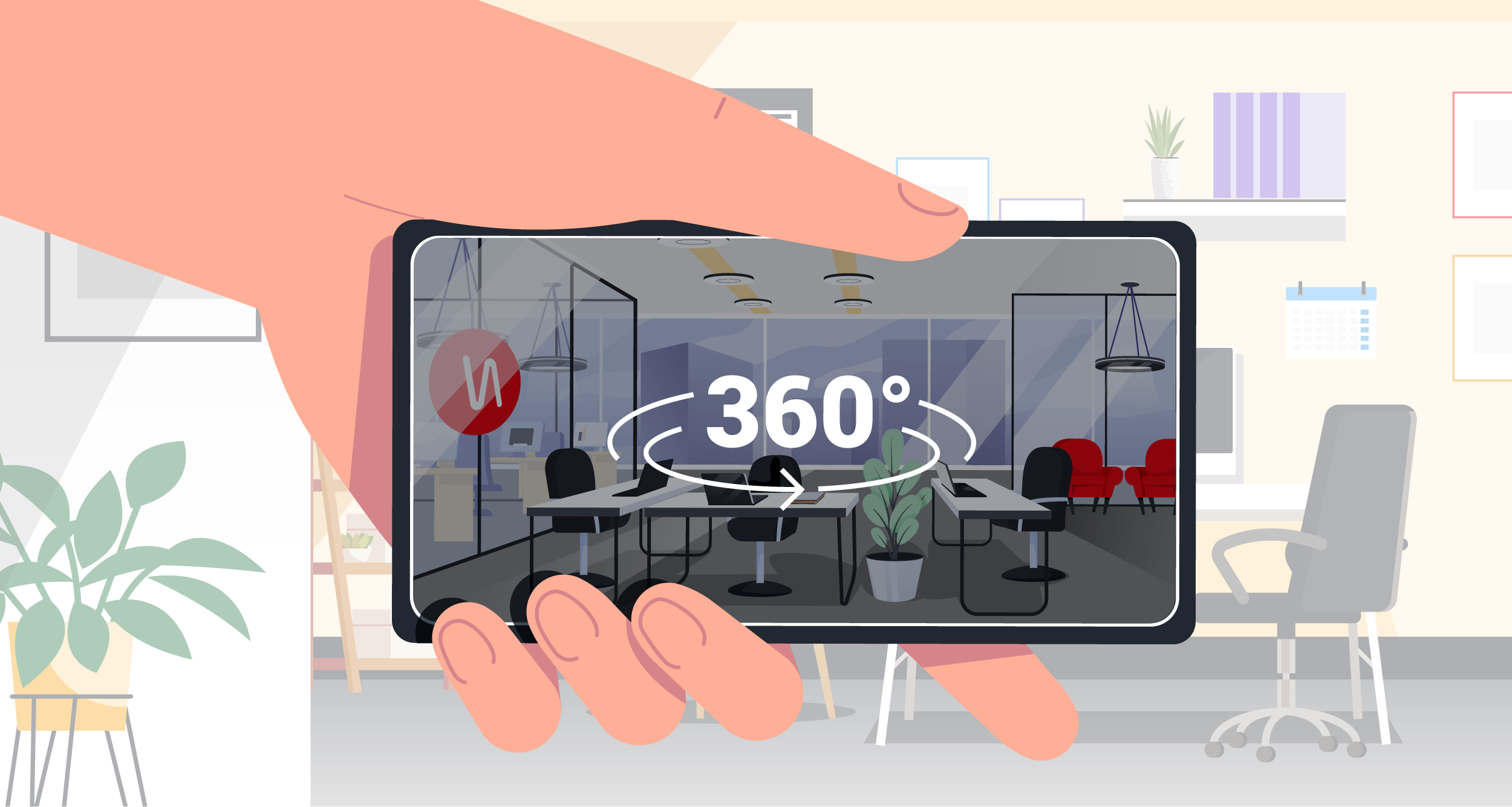
This technology is used to make panoramic videos and photos, similar to the images you can see on Google Street View. By using a 360° camera, a panoramic view of the real world can be captured in a single image. The image is then projected onto the screen of a computer or mobile device, allowing the viewer to control where they point their gaze. Users have access to a 360° view—they can look up, down or sideways.
This immersive technology is a very effective training tool. It makes it possible to simulate real tasks by interacting with content in a very realistic environment. Interactive elements like questions, information bubbles and augmented reality objects can also be added to the environment. Training that uses this technology is also engaging and motivating for learners, who get a more concrete sense of the value of the material they are learning. Augmented reality can further enhance the impact of a demonstration, allowing employees to easily transfer the knowledge they learned into their real-life work context.
Example of an online training class using 360° immersive and interactive technology via Storyline.
360° and Virtual Reality
Unlike virtual reality, which requires a helmet, 360° content can be viewed without special equipment. Activities can be performed using only a mouse or a touch screen. However, the most compelling way for users to experience 360° content is undoubtedly with a smartphone, which also includes an accelerometer that senses how tilted the device is. All you have to do is move the screen to change the field of view!
A mobile device can also be used with special glasses, like Google Cardboard glasses, to explore 360° content simply by turning your head. With this minimalist piece of equipment, users can enjoy a higher level of immersion approaching the level achieved by virtual reality.
Now let’s take a look at the huge potential of 360° applications in digital learning environments.
Onboarding and Integrating New Employees
Onboarding and integration present a unique opportunity for creating a sense of engagement among new employees. The onboarding process can be facilitated with dynamic and instructive activities that quickly put new employees in an action mindset.
A virtual tour of a plant, office space or remote worksite can help employees become familiar with their new workplace before they ever set foot there.
By adding interactive elements, the tour can also become:
- An exploration of the company’s history
- A way of introducing employees to their colleagues
- A demonstration of good occupational health and safety practices
- A presentation of fun facts about the company’s culture
Employers can instill an even greater sense of belonging among new hires by using a personalized approach. New employees will then be more likely to perceive the environment as warm and friendly. Some companies also choose to split integration activities into short 360° segments to avoid cognitive overload and allow new knowledge to be applied more easily.
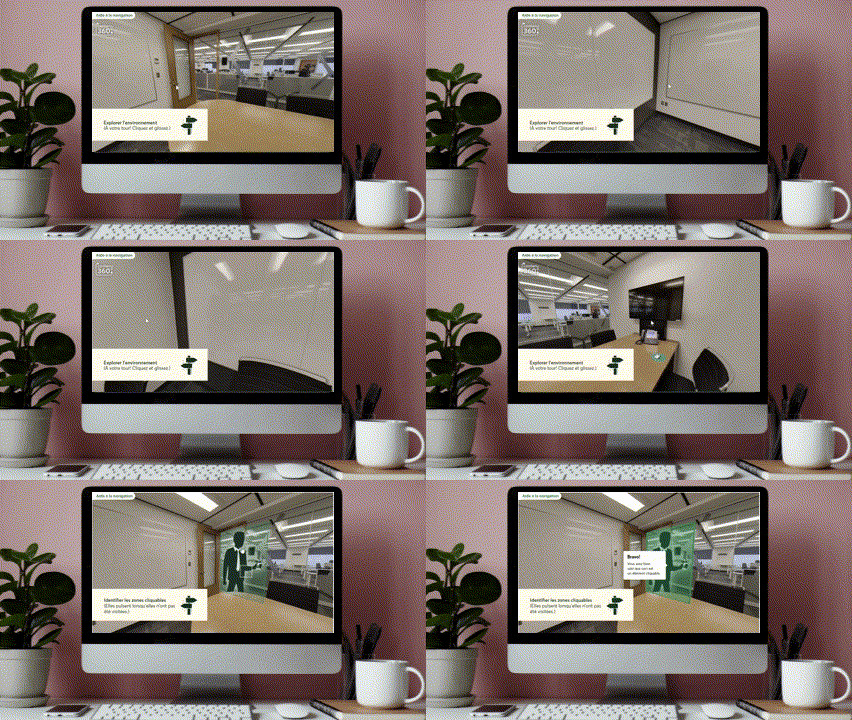
While it’s not essential to incorporate a game into the integration process, 360° content lends itself perfectly to this sort of approach. A fun and playful onboarding process conveys a joyful work culture. For example, a 360° tour could feature a treasure hunt with riddles or clues that need to be solved or photographed by the employee.
Practical Experience Is Essential
Activities that use 360° technology rarely leave learners indifferent. The technology allows them to be the protagonists in a captivating, interactive story, and can bring to life personalized education that changes and reacts to each person’s decisions and behaviour.
Here are some training contexts that lend themselves well to this approach:
- What to do in an emergency (fire, spill, etc.)
- Good occupational health and safety practices (e.g. operation of plant equipment)
- Communication and team building (e.g. counselling, managing difficult clients)
- Decision-making in high-risk and hazardous environments
- Individual and team-based problem solving
This technology also allows processes that are rarely encountered to be practised in a safe environment. By repeating them as often as necessary, employees can internalize the processes and integrate them more easily into their practice.
Example of an online training class demonstrating how to react in case of a fire alarm using 360° interactive technology via Storyline.
Why Is the Technology So Effective?
- No special equipment or technical supervision is required.
- There is no limit on the number of individuals who can do the training at the same time.
- Activities can be carried out at a time and place that is convenient for each person.
- 360° video can effectively render areas and locations that are very big, dangerous, or expensive and difficult to access.
- Research shows that 360° learning environments are highly valued by learners—they feel that their learning is facilitated by doing concrete activities where they are actively making decisions.
Contact Us!
Whether you’re looking to onboard new employees or help your existing staff practice different processes in difficult, remote or dangerous environments, you can easily apply your existing training experience to the interactive 360° medium. The Novaconcept team will be there every step of the way to help you get the most out of this innovative approach, allowing everyone to experience immersive activities that create vivid and lasting memories.
This site is protected by reCAPTCHA and the Google Privacy Policy and the the Terms of Services apply.

Assimilating while you sleep
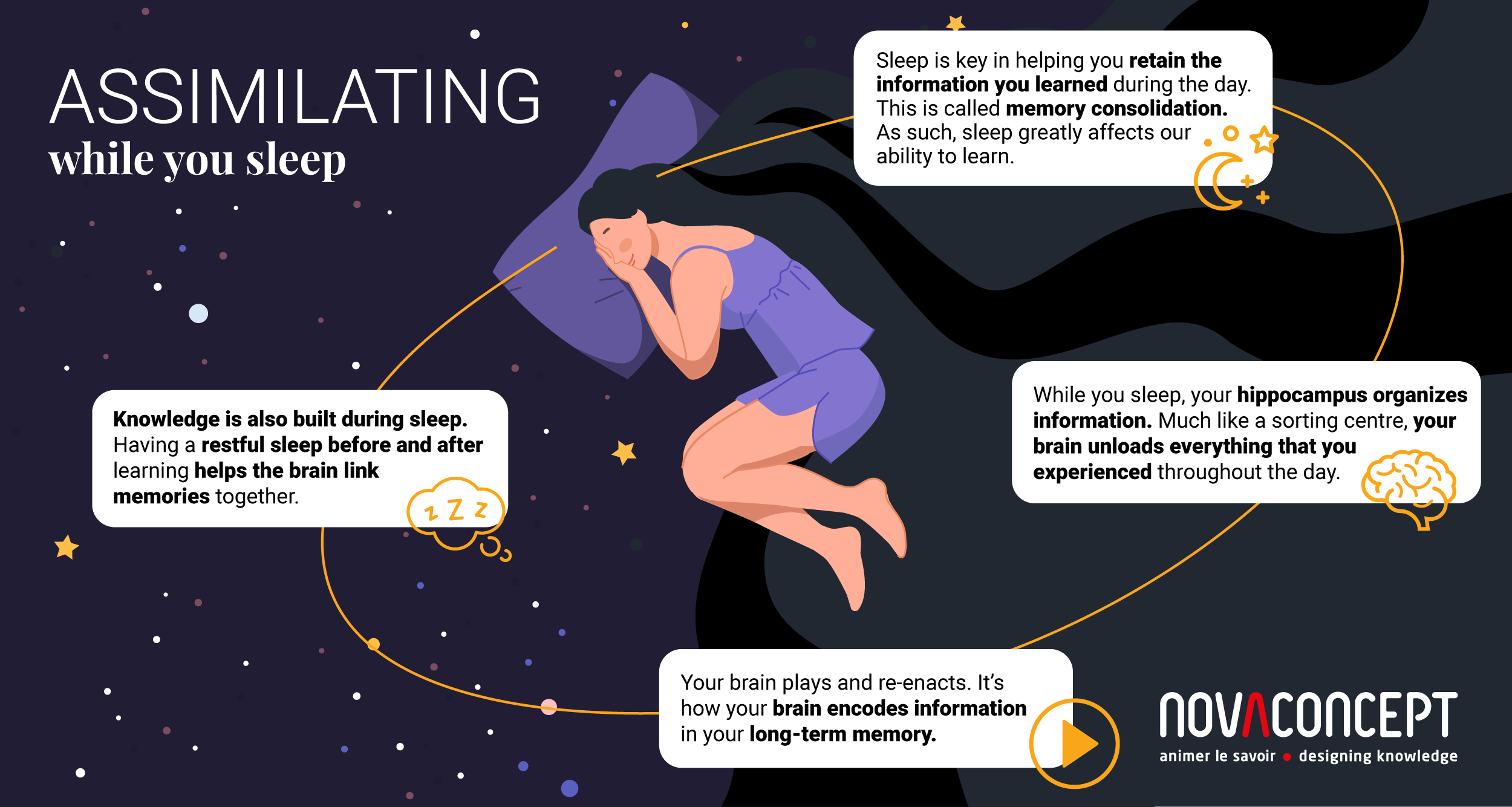
Sleep is key in helping you retain the information you learned during the day. This is called memory consolidation. As such, sleep greatly affects our ability to learn.

While you sleep, your hippocampus organizes information. Much like a sorting centre, your brain unloads everything that you experienced throughout the day.

Your brain plays and re-enacts representations of learned knowledge. It trades information between its various parts depending on the type of memory (semantic, emotional, spatial or procedural). It’s how your brain encodes information in your long-term memory.

Knowledge is also built during sleep because that’s when the brain links memories together. New connections are created between neurons, growing your knowledge. That’s why it’s vital to have a restful sleep before and after learning.
Next time you have a training session, be sure to get enough sleep the night before and the night after!
Sources :
- https://www.blog-lecerveau.org/blog/2013/11/04/dormir-pour-nettoyer-et-reinitialiser-le-cerveau/
- https://www.ted.com/talks/matt_walker_hacking_your_memory_with_sleep/transcript
Contact Us!
Do you like this visual? Would you like to make your information visual and accessible? Contact our experts!
This site is protected by reCAPTCHA and the Google Privacy Policy and the the Terms of Services apply.
Not Just a Ball
Take a moment to close your eyes and picture a soccer ball. If you pictured a white ball with black pentagons all over it, you are not alone.
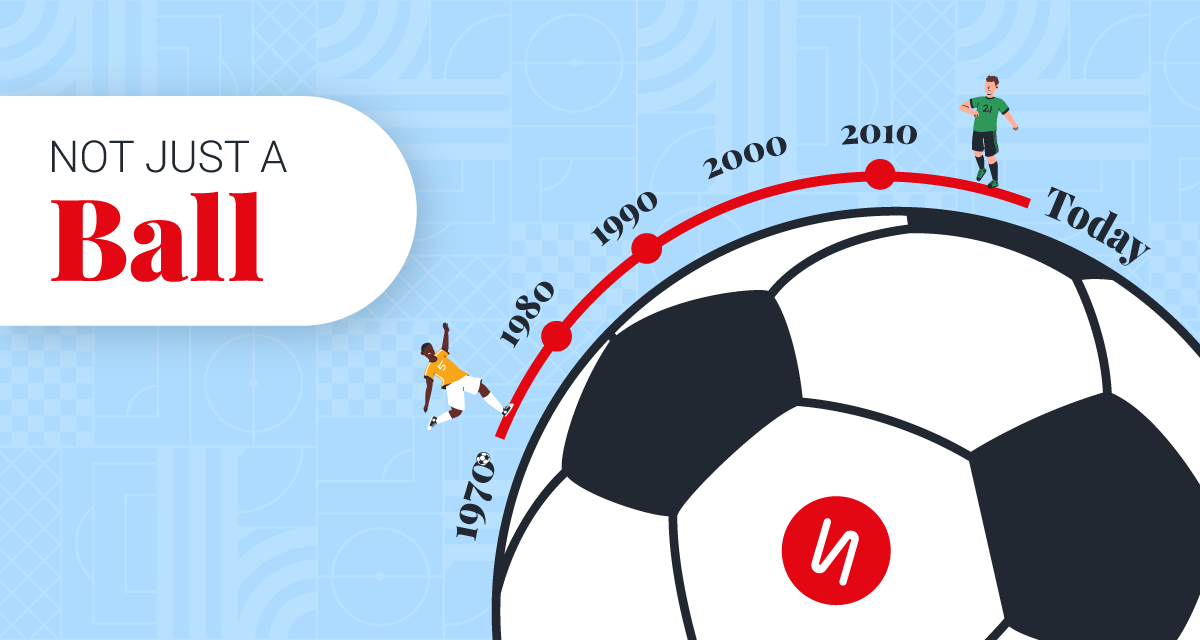
When it comes to sports, there is nothing more iconic than the 1970 World Cup, Adidas Telstar soccer ball. For many, the image of a soccer ball brings them back to memories of watching a game with their family, playing in the park with friends, their favourite World Cup match. Or No matter what memories an image of the soccer ball conjures up, just like you, the ball you remember has grown up too. With every decade, the soccer ball becomes increasingly more advanced, and so do advancements in e-Learning.
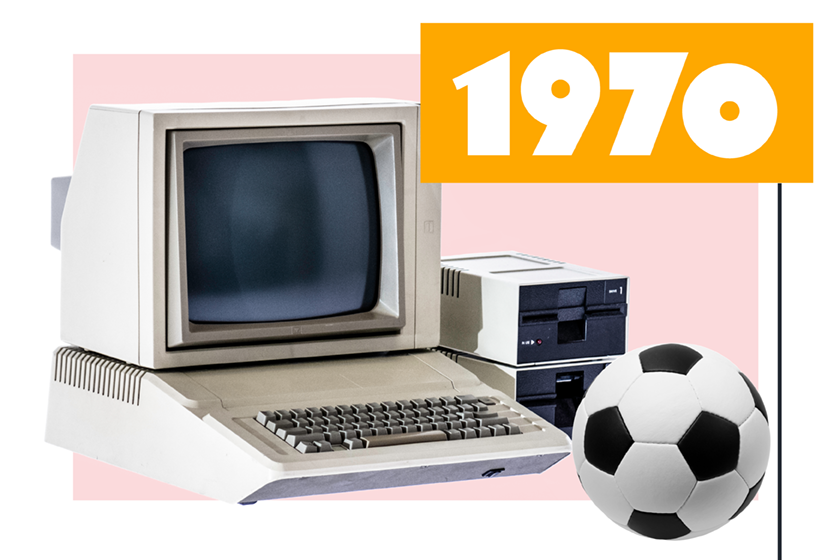
1970s: In 1970, that black and white soccer ball set the standard in roundness, offering players the best game possible for an entire decade. During that same decade, the first personal computers started to appear, and alongside them the first digital courseware. The first uses of satellite communication for distance education started to take place as well!
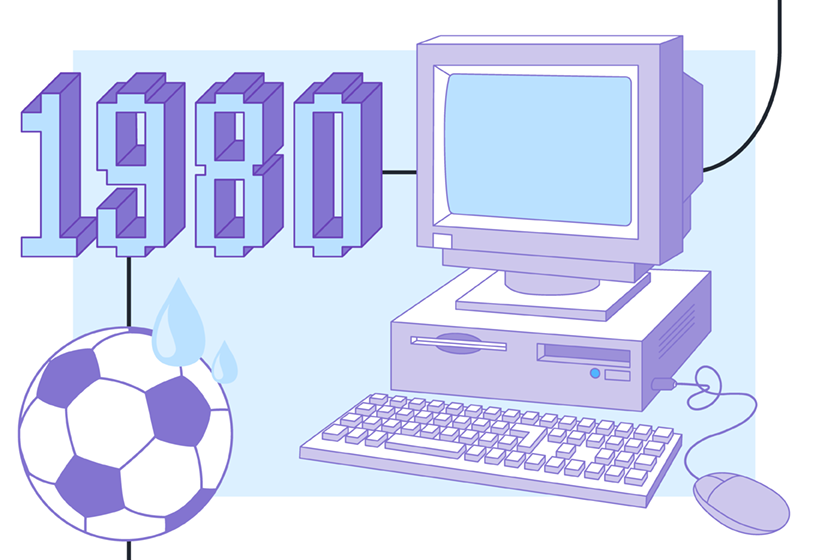
1980s: In the 1980s the ball had started to change, its shape becoming rounder and more waterproof. For the 1982 World Cup in Spain, the ball would now have waterproof-sealed seams. This stopped the ball’s weight from changing in water-logged conditions giving the players more consistent playing conditions. Waterproofing technology improved for the 1986 Mexico World Cup. The ball would be fully coated in a polyurethane finish, further eliminating the intake of water.
In the 1980’s more computers were steadily finding their way into schools and the classroom. Programs were being developed allowing learners to improve their literacy and mathematic skills. Access to digital learning opportunities was stable and constant, everybody had access to the same knowledge. However, by the end of the decade, the first iterations of online learning started to take place with the first online Bachelor’s and Masters’ degrees!
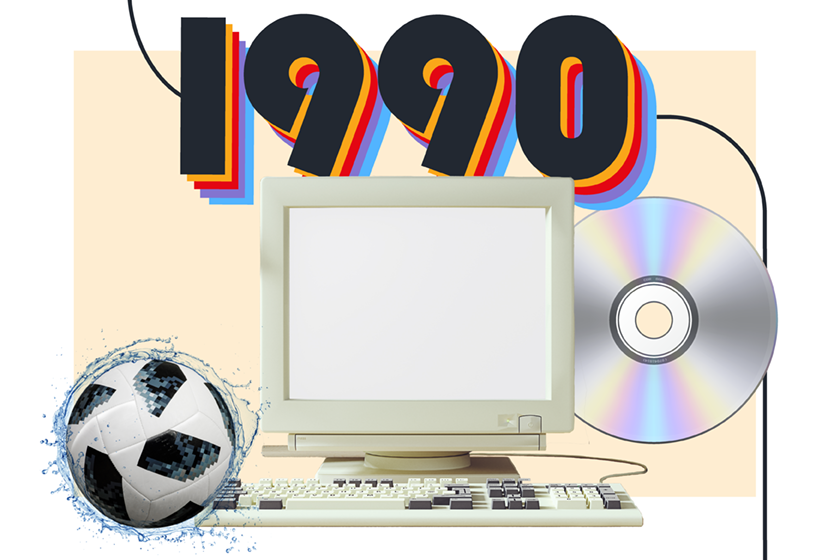
1990s: Out on the field in Italy during the 1990 World Cup soccer game, the soccer ball’s waterproofing was further improved. The latest ball included an internal black polyurethane foam, protecting it from water and condensation. This ultimately provided a better overall play for the players. The next two World Cups in ’94 and ’96 improved upon the ball’s outer layer, adding different polystyrene foams. This made the ball softer, more durable, and responsive to the players’ touch.
Off the field, in the world of e-Learning, the 1990s was a great period for advancements. With the Dot-Com boom and the rise in popularity of the personal computer, CD-ROMs and PDFs made e-learning even more accessible. Digital learning was available via games but also became a popular tool for professional training as well. Organizations could now more easily develop learning solutions for their employees or purchase training programs to improve their employee efficiency. All these changes and developments now meant that e-learning could reach more people and provide an overall better learning experience to all!
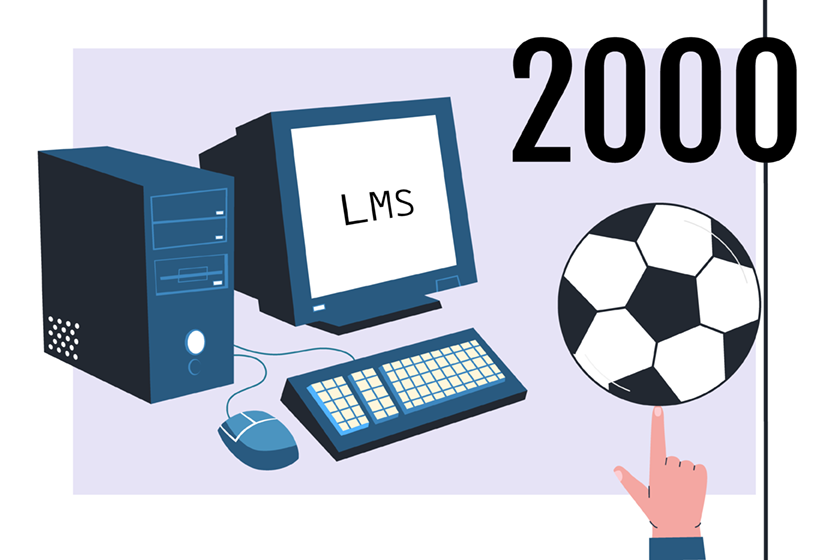
2000s: The 2000s was another decade full of soccer ball innovation. In 2002, the ball’s aerodynamics were improved in Korea so that it flew more accurately. In 2006 in Germany, the ball’s shape and flight were further improved, removing even more friction from the ball, ultimately creating an even better handling ball.
If the ball was flying better than ever in the 2000s, so was the world of e-learning. New software, improved technology, and the introduction of Learning Management Systems (LMS) meant that new standards could be set. The commonly used SCORM system used in e-Learning today was developed to allow for the more efficient tracking and sharing of e-learning content. This facilitated the tracking of learning for both learning institutions and businesses!
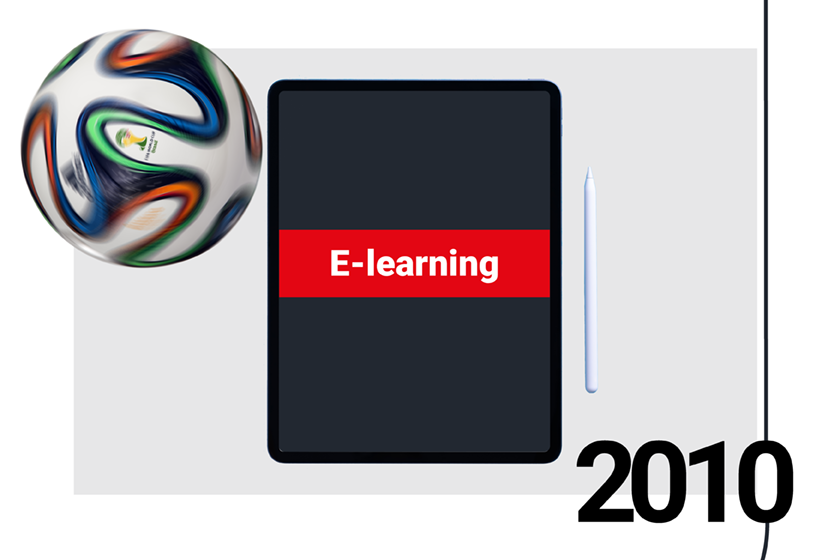
2010s: Debuting in 2010, the World Cup Soccer Balls were now using the latest technology, thermal bonding. Using this technology allowed the ball to be rounder than any soccer ball before and therefore become more accurate. The ball’s performance improved further by reducing the number of panels using thermal bonding technology in 2014 in Brazil.
E-learning became even more accurate than ever in the 2010s. Not because there was new information, but because e-learning could now offer you a way to pinpoint learning objectives. Custom-tailored learning solutions allowed learners to gain knowledge in highly specific fields. E-Learning went mobile, on mobile phones and tablets through a new thing called apps. Personal computers could now fit in the palm of your hand! New delivery methods also arose, using gamification, learning became something fun, engaging, and competitive. Learners could meet their goals whether it was personal or corporate.
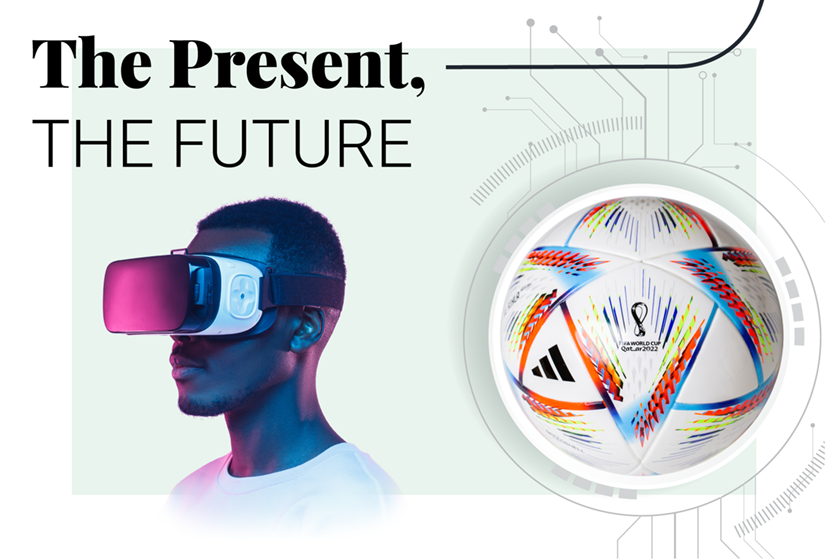
The Present, the Future: This year’s soccer ball is the start of a new decade of World Cup innovations. It is considered the most high-tech ball yet. Designed to be virtually seamless, it is thermally bonded at the seams to reduce air resistance as much as possible. It is designed to allow the ball to fly more accurately at even faster speeds. Loaded with the newest technology, it even includes a suspended sensor to assist with AI refereeing.
If in 2022 the current ball is loaded with the newest technology, the same could be said with the field of e-learning. Virtual and augmented reality are both taking off. Learners can visit museums or performs experiments without ever entering a museum or operating room. Learning platforms and applications are now using AI to assist learners with their learning, helping them identify weaknesses and build up knowledge and skills. It is a very exciting time for e-learning, and it’s very hard not to look forward to what is around the corner!
Just like with e-learning who knows what advancements our favourite black-and-white soccer ball will receive in future World Cup games? One thing is certain for both fields, we will be flying higher and further than ever before, and if you are looking for the perfect training solution, the Novaconcept team will be there to take your learning to newer heights!
Contact Us!
Has this article piqued your interest? Do you want to discuss solutions tailored to your needs? Get in touch now using the form below!
This site is protected by reCAPTCHA and the Google Privacy Policy and the the Terms of Services apply.

Football or Soccer for the Win?
Some of the greatest debates that arise around the World Cup season.
- Was Pele or Maradona the better player?
- Is Messi or Ronaldo the greatest modern player?
- Did the referee get paid to make that call?
- and lastly, is the game called Soccer or Football?
In our field of Instructional Design and content development, every word counts. With each learning experience written, our words are chosen carefully to be sure it makes the largest impact and reach our target learners. In North America, we all know football is a game played by carrying a ball from one end of the field to the other, meanwhile, in Europe, football is played by kicking the ball and the use of hands is not permitted. Both sports are very popular and both have almost 150 years of tradition. But this begs to question, which sport is right? If an instructional designer were to build a learning experience on the history of sport they would first need to be able to understand who their learners are. If we take look below, we can see how they would approach the choice of football or soccer by referring to the expert body of knowledge available to select the most impactful terminology for their learners.
To solve this debate, we need to actually examine the development of three sports in the mid-19th century.
Football
Already a very popular sport in 1863, the first official rules for Football were written by England’s Football Association. The game was played by kicking the ball from one end of the field to the other while trying to score a goal in the net. The rules became the foundation for the game that will be played this year in Qatar.
At the very same time, a new variation of the sport was developing called Rugby Football. This game was named after a boarding school in England and the main difference was that players were allowed to advance while carrying the ball. This was a completely different Football from the game described by the Football Association.
It wasn’t until the 1880s that the first appearance of word soccer came to light. In order to tell the two athletes apart students at Oxford University coined the term rugger for athletes who played Rugby Football. They used the term assoccer for the ones that played Association Football.
Assoccer was soon shortened to Soccer and quickly spread beyond the university’s gate becoming the game’s unofficial nickname. Association Football wasn’t the only sport to shorten its name. With the turn of the century in England, Rugby Football was shortened to simply Rugby. With no other competition for the name Association Football won the name Football and is referred to by this name by millions worldwide.
Football is the correct name for the sport. Keep that in mind if ever you find yourself writing training for a European target audience.
However, while all this was taking place across the pond, another new sport was developing in North America. Merging aspects of both Rugby Football and Association Football, Gridiron Football was born. Named for the field it was played on, in this sport player could only advance while holding the ball. however, very much like the other two sports, it seemed as though its name was decided by its fans, and it became more commonly referred to as football.
The rising popularity of Gridiron Football meant that North American Association Football players needed to choose a name for their sport to distinguish themselves from the new game. Soccer being an already-known nickname for the sport from England, it became the natural choice for Association Football players to refer to their sport.
By the mid-1900s, what was once the ruling body for the American Association Football game, the United States Soccer Football Association, changed its name to the United States Soccer Association, removing football from the North American version of the game forever. This made the ultimate distinction between Football and Soccer in North America.
Soccer is the correct name for the sport. Likewise, if writing for a North American target audience, be sure to use Soccer when referring to the sport.
Interestingly, both terms are correct, and both come from the same sport. Groups of friends and students played a game that they enjoyed and loved. Ultimately it was the evolution of different sports, in different places that gave way to unique fans. Fans and players are what makes sports special, and it is up to them to decide the best name for their favourite games.
If you ever find yourself debating which terms to use in your training, you can count on the team at Novaconcept to help you make the correct choice. Training is our game and as fans and players, we know which terms to use so that together we can make the winning goal. And remember, if you’re starting any debates this World Cup, you can already skip this one, we all know the real name of the game is…
Contact Us!
Has this article piqued your interest? Do you want to discuss solutions tailored to your needs? Get in touch now using the form below!
This site is protected by reCAPTCHA and the Google Privacy Policy and the the Terms of Services apply.
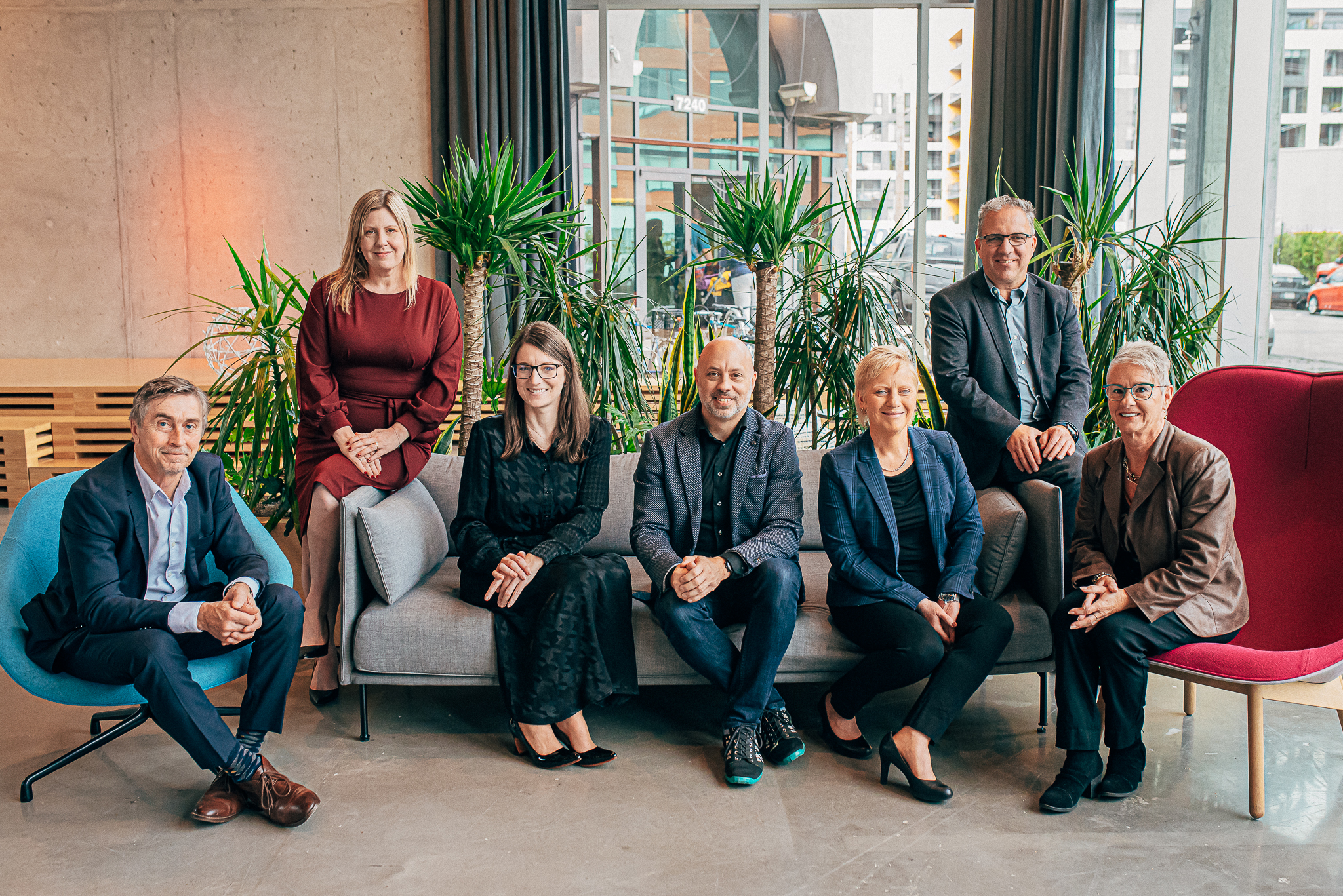
Coaching de Gestion and Novaconcept establish a strategic alliance
Coaching de Gestion and Novaconcept establish a strategic alliance to provide state-of-the-art expertise
in transforming leaders and organizations
MONTRÉAL (Quebec) November 15, 2022
At a time when society is placing an ever-increasing value on the development of leaders and organizations, innovative professional support is more important than ever. Coaching de Gestion and Novaconcept are joining forces to combine their cutting-edge expertise and offer new professional support solutions to develop coaching skills and competencies and to transform organizations and talent.
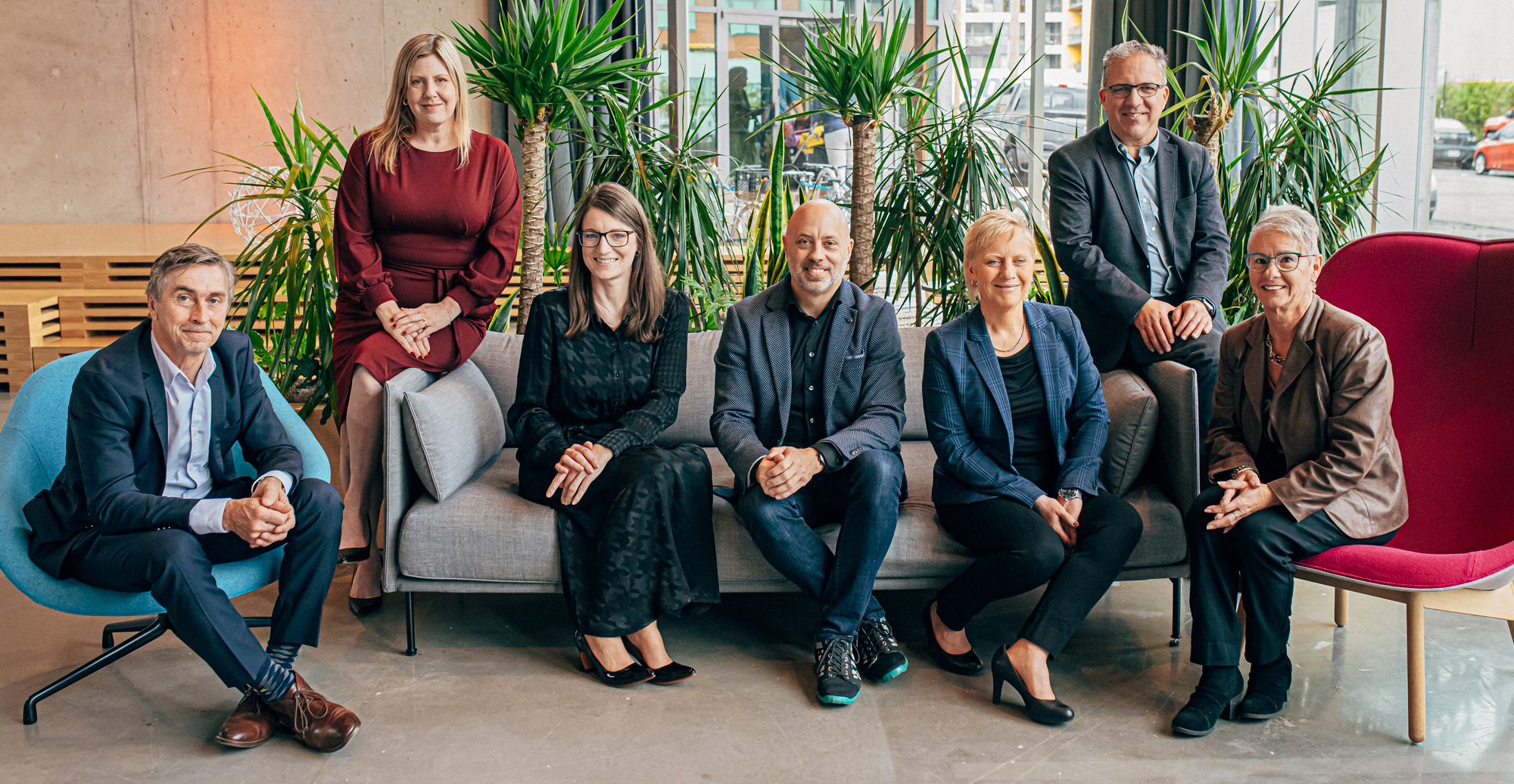
Based on shared values and principles, this alliance is a clear step forward in transforming leaders and organizations. Both companies share the goal of supporting organizations as they face shifting business needs and seek to develop the full potential of their talent.
Through this alliance, Coaching de Gestion and Novaconcept are also affirming their desire to combine their skills, resources and expertise, which have earned them solid reputations in the market, to boost the development of their activities.
As per Martine Lemonde, President and CEO of Coaching de Gestion: “We firmly believe that we have something unique to offer through this alliance, namely the combination of diverse expertise focused on the real needs of individuals and organizations who place high value people and ethical behaviours. This alliance reflects the spirit of collaboration that unites us in pursuing our respective visions and missions. For Coaching de Gestion, it affirms its vision of ‘Inspiring organizations for a better world’ with a view to creating an environment where organizations of all kinds are people-focused and efficient entities.”
For Annabelle Cadieux, Vice President of Organizational Transformation at Novaconcept: “This alliance makes sense for us as we fulfill our mission to provide organizations with a signature experience that helps drive the evolution of talent and leadership towards a more caring, agile and innovative culture. Joining forces will help us offer development spaces that are even more grounded in the real needs of organizations. It’s all directly aligned with our vision, which is being an active player in improving work environments and developing authentic, caring, inclusive, courageous, agile, strategic and value-multiplying leaders.”
About Coaching de Gestion
The story of Coaching de Gestion spans almost 25 years of passion for developing human potential. As the first French-language coaching school in North America, and through their certification programs that help develop individual and collective leadership, they have become the benchmark for developing coaching skills and competencies in Quebec. They are also active in the Francophone world abroad through their remote learning offerings. To learn more: https://www.coaching.qc.ca/
About Novaconcept
Novaconcept is a creative, diverse and close-knit team that has been supporting organizations with knowledge and passion for over 23 years. Specialized in providing innovative professional support solutions in skills development and organizational transformation, they combine the best of technological know-how and leadership development by providing a complete multimodal approach adapted to current market needs. To learn more: https://www.novaconcept.com/
For more information, contact:
Coaching de Gestion
info@coaching.qc.ca
514-735-9333, ext. 1
Novaconcept
infos@wp225906.wpdns.ca
514-845-1222
Adult learning and employee experience
Attracting and retaining talent is one of the top concerns in our society today. It pushes companies to innovate in order to find different strategies to better meet the needs and expectations of their resources, especially for the new generation of employees.
Is andragogy, defined as the study and practice of adult learning, a key solution to this hot-button issue?
Although the concept has been around for over 50 years, the adult learning field has grown significantly over the last decade. This is not surprising, considering that skill development has the power—when properly targeted and coordinated—to directly address every human being’s three basic psychological needs underlying self-determination theory, namely:
- Competence
- Autonomy
- Relatedness1
Instability, uncertainty and change have become more pronounced on the job market in recent years and it’s clear that it is now imperative that we revisit traditional training approaches, which no longer seem to be as successful as they once were.
Getting back to basics…
Before exploring new avenues and approaches to developing skills, let’s get back to basics and recall the six principles of andragogy that foster adult learning, as put forward by Knowles.2
- Adults need to know why they need to learn something (why, what and how).
- Adults have a need to feel responsible for their learning.
- Adults need to build on their experience (based on known resources and models).
- Adults are ready to learn if training solves an immediate problem.
- Adults want their training to be focused on problems rather than on skills.
- Adults learn best when motivation comes intrinsically.
Now, let’s connect these principles to current company needs: synergy, cross-functionality, agility, innovation, resilience, competition, engagement and talent retention by asking the following two questions:
- Do the coaching solutions currently available to your teams meet the needs mentioned above and develop new skills that your work context requires in a sustainable and personalized manner?
- What can be done to get there if that’s not the case?
Here are a few avenues Novaconcept suggests to companies to fuel thinking in line with these questions and consider a fresh approach to developing skills:
- Take a step back and take stock of the current situation in your company
What strategies to support your teams have worked well and/or not so well in the past and why? What are the current statuses of your teams in terms of capacity, talent and existing and missing skills? What are your identified learning needs? What about your leaders? - Carry out specific strategic planning for skill development
Following your analysis, draw up a chart of the skills your company needs in the future that are in line with your strategic orientations and operational needs. Scale up the exercise to your entire company, paying special attention to developing your leaders. They are your key players in building a learning culture. Set clear objectives that will become key metrics to help you nimbly track the effectiveness of the coaching activities you’ll offer in the future. - Target, plan and implement different coaching solutions to support your leaders and teams, in line with your corporate DNA, needs, challenges and ambition
Evaluate different potential coaching approaches to help you achieve your goals and guarantee sustainable development for your teams, like workshops/development paths combining e-learning and group learning, individual or group coaching, strategic consulting, co-development activities, mentoring, talent assessment, conferences and design-thinking activities. These are just a few ideas of what you can put in place to help your teams thrive. Ensure that your chosen strategies are complementary and establish a realistic and progressive plan to develop the targeted skills. - To implement training activities, ensure that the proposed methodologies are consistent with the adult learning principles suggested above
Aim for development spaces that foster reflection, discussions between peers, mutual support, experimentation, action and collective intelligence rather than piecemeal training not tailored to your company’s situation. John Dewey, an American psychologist, philosopher and specialist in education and new education, reiterated this idea as follows: The less you teach, the more you learn. Each experience should help prepare a person for more profound and beneficial future experiences. That is the very meaning of growth, continuity and renewed experiences.3 - Feel free to seek out external support in crystallizing your thought process and in offering support solutions
In short, adult learning’s place in a company’s ecosystem should be more important than ever. The work needed to change your approach to skill development may seem overwhelming at first, but it’s a key element in attracting and retaining talent to build teams committed to and engaged in your company’s success.
Novaconcept is a skill development and organizational transformation agency that helps companies challenge the status quo and do things differently. We co-create support solutions with you to build unique development spaces through a mix of multi-modal approaches.
[1] Deci, E. L., Intrinsic motivation, New York, Plenum Press, 1975
[2] Inspired by: Andragogy in practice (Knowles, Holton and Swanson), 2005
[3] Mayen, Patrick, and Catherine Mayeux. Expérience et formation, Savoirs, Vol. 1, No. 1, 2003, pp. 13-53.
Contact Us!
Has this article piqued your interest? Do you want to discuss solutions tailored to your needs? Get in touch now using the form below!
This site is protected by reCAPTCHA and the Google Privacy Policy and the the Terms of Services apply.

Promoting Well-Being at Work: It Starts With You
Care and well-being at work, reality or utopia?
The new challenges of recent years related to the pandemic, like telecommuting, labour shortages and hybrid work have refocused priorities on people as a resource inseparable from a company’s success [1].
In the current ever-changing context, it’s no longer required to prove that well-being and care are key to team mobilization, individual employee fulfillment and overall company performance. Many articles have been written on the topic, but what’s the reality on the ground?
- As a team manager or employee, have you really been able to take a step back from the issue?
- What have you put in place to ensure, first and foremost, your own well-being as captain of the ship or crew member?
- Are you being kind to yourself or are you drowning in the daily hubbub and feeling like you can’t get your head above water?
- If you’re a manager, have you put concrete actions in place to ensure that this concern is at the top of everyone’s priorities?
- Do you talk to your team about the shared responsibility of taking concrete, daily actions to care for others, to show empathy, to offer help and to ensure that the work climate is both energizing and supportive?
If you answered “no” to one or more of these questions, now’s the time to stop and give them some thought.
Prioritizing your own well-being and balance is necessary for building a culture of care within your team, whether you are the leader or a team member.
[1] Proust, S. (2015). “Prévenir l’épuisement professionnel par la mobilisation des ressources psychosociales : l’organisation du travail dans son rôle potentiellement bienveillant.” [Preventing Burnout by Mobilizing Psychosocial Resources: The Work Organization in its Potentially Benevolent Role.] Psycho-Oncologie, 9(2), 69-75.

Some Novatips for being kinder and more forgiving to yourself
- Take a step back from your calendar and evaluate what you could adjust to improve your recent balance between your professional and personal life.
- Learn to say “no.” Take time to think before you commit to a new project or request. How does this new request stack up against your priorities? Could you delegate the task or project?
- Add a 15-minute block to your schedule each week to evaluate how your week went, tune in to your emotions and energy levels, and set a wellness goal for the week ahead.
- Add something different to your daily routine once a week by packing different lunches, changing your route to the office or the walk you take if you’re working from home.
- Gradually incorporate physical activity into your schedule and try to get 15 minutes of fresh air at lunch.
- Introduce breathing and relaxation techniques to your routine: five to ten minutes a day will make all the difference.
- Respect your limits and accept that you aren’t perfect and that you’re doing your best.
- Dare to ask for feedback and acknowledgement from your teams.
- Develop your growth mindset.
Suggested reading: Six Ways To Develop A Growth Mindset – Forbes
A strategic partnership with yourself
By fostering your personal and professional well-being, you’ll be committing to a process of transformation that will help you, in turn, contribute to a culture of care within the collective intelligence of your organization.
Novaconcept offers various services to support leaders in this effort and in implementing a culture of care within their teams.
Contact Us!
Has this article piqued your interest? Do you want to discuss solutions tailored to your needs? Get in touch now using the form below!
This site is protected by reCAPTCHA and the Google Privacy Policy and the the Terms of Services apply.
Remote Work and Happiness: The Winning Combination for Managers
More than two years into the pandemic, the business world is still searching for solutions to adapt to the new reality of remote and hybrid work. This unique context is transforming managers’ roles, who are developing new skills to better work with their teams. To ensure cohesion within a team, keep employees satisfied at work and maintain corporate culture, an increasing number of managers are embracing e-leadership. This new concept is all about practising leadership in a virtual context, using information and communications technologies (ICT) to foster engagement, accountability, collaboration, influence, inclusion and much more.
Here are four best practices to ensure cohesion and satisfaction when your teams are working from home.
According to Marie-France Émond, CHRP and Vice-President of Operations and HR at Indigo Consulting, “It’s essential to plan at least one meeting per week to touch base with employees and get status updates on their projects.” (2) With this in mind, a best practice to implement is to plan one or several weekly meetings by videoconference or in hybrid mode. These fixed meetings help keep the lines of communications open, giving team members an opportunity to share ideas and report the progress made in their work. This makes it possible to follow up on various projects, keep the team connected and make sure everyone is happy at work.
Managers can also organize quarterly one-on-one meetings, especially for new hires who require a more personalized follow-up. Strong points and areas for improvement should be discussed in a very spontaneous atmosphere. Personalized e-coaching leverages technology to offer a highly efficient, motivating, and satisfying coaching experience, both for the employee and their manager.
As employees return to the office for hybrid collaboration, we must stress the importance of having in-person meetings. In fact, the return to hybrid work can leave employers puzzled as they spend more time and effort trying to find a formula that pleases everyone.
Annabelle Cadieux, Vice-President of Organizational Transformation at Novaconcept, explains: “Over two years ago, we had to rethink how we organize our work overnight and bring technology to the forefront of our organizational strategies. Although our teams were dependent on remote methods of interaction for several months, they are now faced with the need to develop new collaboration strategies in hybrid mode. Striking a balance between the satisfaction of employees (who happen to like remote work!) and the power of in-person exchanges will be the next challenge for organizations over the next few months.” According to Ms. Cadieux, the key to implementing an efficient hybrid model is to break the dichotomy between virtual and in-person environments. She recommends replacing the physical space by one focused on experiences, which will help engage employees and redefine collaboration.
Listening to your employees is important but being attuned to them matters even more. In fact, managers are responsible for maintaining online connections between remote workers. To check the pulse of their team, they must first actively listen to each person’s needs. Communication is the watchword here. Working from home limits the opportunities for informal conversation, so managers have more trouble pinpointing their team members’ feelings, intentions, or level of comfort. This is why, in addition to meetings, we strongly recommend conducting periodic anonymous surveys. They help strengthen corporate culture, understand the needs and expectations of employees and measure their levels of engagement and satisfaction. Keeping surveys anonymous ensures maximum participation and freedom of expression. So, when you analyze the results and collect feedback from the group of participants as a whole, you can foster a climate of trust and make employees feel they are being heard. This will definitely contribute to their happiness at work.
According to Ms. Cadieux, “trust remains the basic element to create a safe space where employees feel comfortable to reach out. It is vital to create a healthy environment where each employee is comfortable with sharing their challenges, failures, and accomplishments. Having open conversations with your employees or colleagues and not being afraid to show your vulnerability is fundamental if you want to build a strong team, no matter the working arrangements.”
Here, we are referring to a virtual space designed for social interaction and informal conversation outside of your organization’s mandates. It’s a bit like the proverbial water cooler at the office. This spontaneous conversation space helps reduce psychological distance.
You can create multiple discussion channels based on your employees’ personal interests. For example, if several of them love talking about art exhibits, paintings and movies, why not create a channel called “Art”?
Openness, understanding, and especially empathy are key to employee happiness. These values also play a big role in emotional intelligence. Managers are required to be open, understanding and available at all times. Depending on the situation, they could even take on the role of coach or mentor.
To create an environment where employees can thrive, Marie-Claude Arguin, President of happieRH, recommends “focusing on tasks that increase the sense of well-being, either by generating results or by promoting collaboration.” (3) For example, managers can assign team members to tasks they master quite well, which will increase their self-confidence and satisfaction. Group tasks also reduce feelings of isolation and anxiety.
Conclusion
Achieving and maintaining a new balance is essential to successfully reconcile work and happiness in a remote or hybrid work environment. Managers have a plethora of applications and technological tools at their disposal to communicate, collaborate and better connect with their teams. However, technology is not the be-all and end-all to ensure employee happiness. Implementing a form of e-leadership tailored to the team, which includes emotional intelligence and active listening, is also essential. When you combine technology and soft skills, you have the winning formula for happiness. This combination motivates employees, strengthens cohesion and breaks isolation.
The changes brought on by the remote and hybrid work reality have led many organizations to revisit their approaches to ensure their teams’ efficiency, cohesion and well-being. This is why Novaconcept guides leaders as they implement initiatives and key actions to address these new working methods with agility.
We are there to help you achieve your organizational transformation.
Sources :
1. https://www.frontiersin.org/articles/10.3389/fpsyg.2020.554253/full
2. Le télétravail a ses avantages certains. Qu’en est-il de l’esprit d’équipe et de la culture d’entreprise ? (French only) | Hrjob.ca (latoiledesrecruteurs.ca)
3. Le bonheur est à distance (French only) | L’actualité (lactualite.com)
Has this article piqued your interest? Do you want to discuss solutions tailored to your needs? Get in touch now using the form below!
This site is protected by reCAPTCHA and the Google Privacy Policy and the the Terms of Services apply.

Reacting to the past to shape the future
One presentation in particular caught our attention during our visit to the Numérique 2022 conference at HEC Montréal, last May. Two philosophy teachers from Collège André-Grasset shared how they use the game “Reacting to the past” to put into practice the philosophical ideas discussed in class.

The concept :
“Reacting to the past” is a competitive role-playing game based on historical events. The objective is to recreate a key moment in history, for example the French Revolution, by playing the relevant historical parties. Each participant receives a card with the role they will play. The card details, among other things, their political positions, their values and the objectives that the participant must try to achieve (for example, passing a law). As the game progresses, each player must react to the announcement of real historical events (riots, attacks, accidents, etc.) according to what is on their card. Archive articles can also be used, or press briefings staged, to introduce a historically realistic media presence. To achieve their objectives, participants must give speeches and make alliances. Will they make the same decisions as their historical predecessors or can they change history?
A role play-based pedagogy
This pedagogical formula, increasingly used in the workplace, puts participants in a fictitious yet realistic situation where they must apply their knowledge and in which their decisions have consequences (fortunately, not real ones!). This approach, seen in online training, makes it possible to apply theoretical ideas in a safe environment. Using events that have taken place within your company (managing a project involving a large number of people, for example) or an external event that had a significant impact on your operations (such as the ice storm), provides you with tangible elements to react to and upon which to base your decisions. This can help you to better understand the strengths of your teams and which situations may require more preparation.
What kind of situation would you like to prepare your teams for?
Has this article piqued your interest? Do you want to discuss e-learning solutions tailored to your needs? Get in touch now using the form below!
This site is protected by reCAPTCHA and the Google Privacy Policy and the the Terms of Services apply.
Express Your Pride
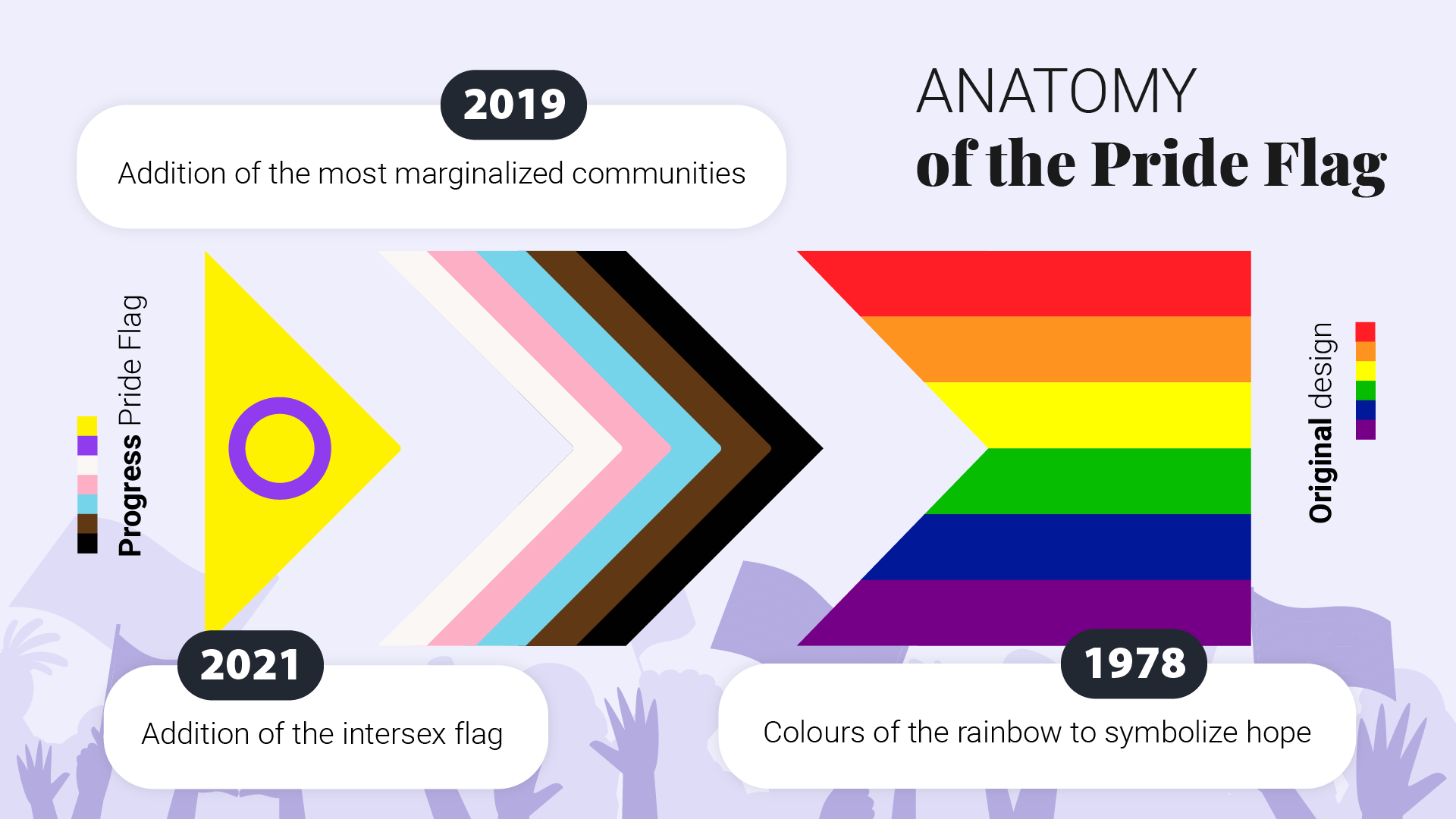
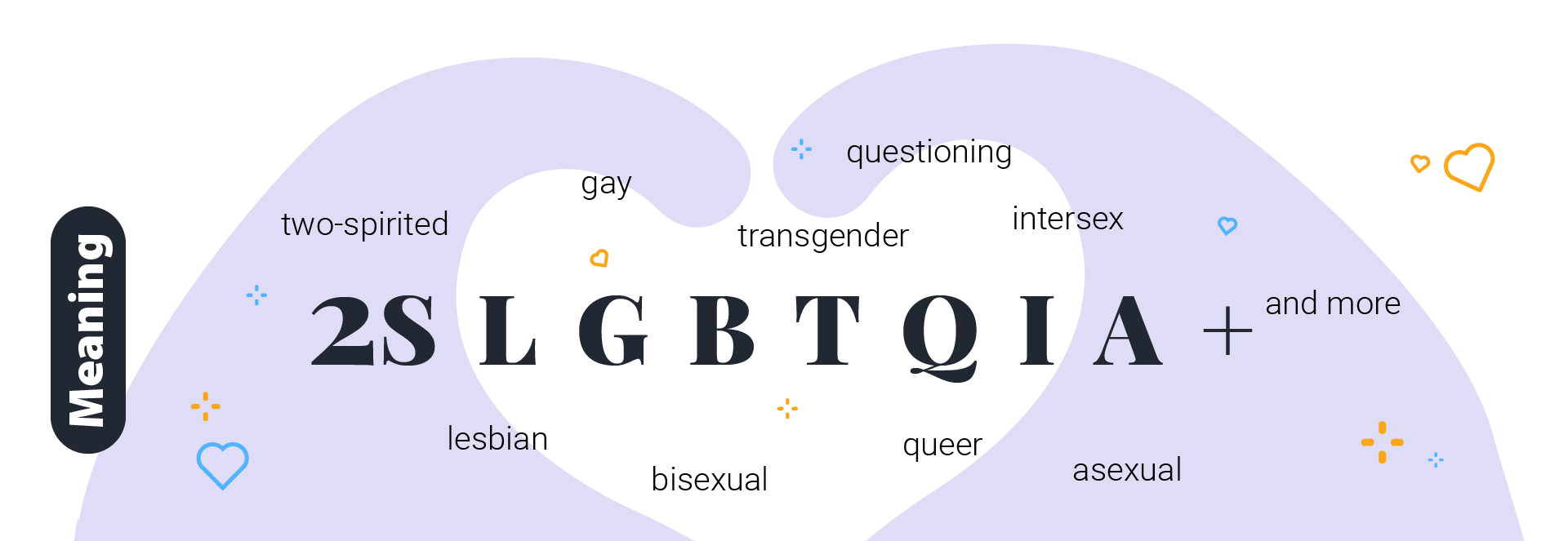
In order to be more inclusive of previously underrepresented queer groups, 2SLGBTQIA+ communities are continually updating and clarifying their acronym. It follows that the flag that represents them changes regularly, too.
The flag has evolved since its original design in 1978. It uses the colours of the rainbow to symbolize hope.
A second version, popularized in 2019, introduces the arrow in white, pink, blue, brown and black. This new flag aims to highlight the most marginalized communities, namely racialized people, non-binary and trans people. Note that black also represents people living with HIV and those who have succumbed to it. The addition of an arrow pointing to the right shows forward movement as well as the progress still to be made.
Finally, in its most recent version (2021), the Progress Pride Flag features the intersex flag at the heart of the arrow, highlighting the presence of intersex people in 2SLGBTQIA+ communities.
NOVACONCEPT values diversity within its team. During this month of Montréal Pride festivities, the entire NOVATEAM celebrates sexual diversity and the plurality of genders with its members.

Developing Your Soft Skills is the New Reality
There’s a lot of thought given to the place of training within companies. Online training offers countless possibilities in terms of content and methods. A corporate learning culture has many advantages for companies. E-learning, in fact, represents a solution to the labour shortage. Faced with all these options, what would you, as a manager, prefer?
The knowledge to value
Imagine a meeting room with three people about to present a project to their team. The first person describes the project to the group and details its key elements: deliverable deadlines, budget, client information, etc. Then, the second person talks to the group to introduce some of the software needed to complete the project and outline the processes and benefits of each application. The third person moderates the meeting and is active throughout. They give voice to every team member, make sure everyone understands the project, and pay attention to any raised concerns. They end the meeting by motivating the team.
Now imagine the same meeting without the first person. Critical information would be missing. The same goes for the second person. The team cannot finish the project without knowing the processes. But what is the need for the third person in terms of progress on deliverables? Their attitude helps the meeting run smoothly while addressing each team member’s expectations. Their role facilitates collaboration.
In the trio above, the first person embodies knowledge—theoretical knowledge. The second embodies know-how, or the technical application of knowledge. Finally, the third embodies the soft skills and personal behaviours that match the job’s expectations and values. Soft skills can be described as emotional intelligence, active listening, empathy, autonomy, creativity, and more. How do you effectively develop these skills?
Nova recommendations
Getting there requires that the training environment be safe and free from unnecessary stress.
The media used must place the individual at the core of the learning process and also give feedback after each hands-on exercise. Ultimately, it must meet the objectives. To develop their professional soft skills, learners must interact with others to experiment with new behaviours.
At first glance, preparing a training session with role-playing between colleagues seems like an easy solution to improve teamwork or communication. However, you should steer clear of this approach. Take, for example, a workshop on conflict resolution that goes awry and creates real tension between the participants. Put yourself in the learner’s shoes—would you feel comfortable trying new strategies? Virtual reality makes it possible to meet the criteria we mentioned above while avoiding uncomfortable situations. Here’s why:
- Using gamification, virtual reality features avatars and actors. The learner is now in a realistic work situation without running the risk of affecting their relationship with their co-workers.
- Using a VR headset’s immersive qualities elicits emotions that influence decision-making and adds realism to the learning process..
- A learner can repeat exercises as many times as needed in just a few clicks. Since there’s feedback after each attempt, learners can quickly see their errors. These then become a source of information to deepen their understanding. Virtual reality provides a space for reflection and a sense of awareness conducive to learning.
Virtual reality needs a headset, an application and controllers. We offer variations that make the experience more accessible and only require a computer or mobile device. VR is immersive thanks to its 360-degree vision field.
Imagine training to develop soft skills in VR. The learner is alone in a room and the VR headset takes them into an immersive experience. They are ready to start the training with both controllers in hand. Faced with many avatars, they explore choices about how they would react in the scenarios, with no one there to point out their mistakes or pressure them. After several errors in an exercise, crucial feedback helps them better their understanding. The person becomes aware of their patterns and changes certain behaviours at work. Through this realistic learning situation, they are on their way to reaching their full potential.
Lastly, developing soft skills helps both the people and the company grow. Acquiring these skills is within your reach. No matter the challenge, we have a learning solution for you. Visit our website for more information.
Let’s connect!
Do you like this visual? Would you like to make your information visual and accessible? Contact our experts!
This site is protected by reCAPTCHA and the Google Privacy Policy and the the Terms of Services apply.

A Summer Christmas
 A Summer Christmas
This tradition is thought to originate from a time when families were much larger and means of transportation less advanced. It was challenging back then—if not impossible—to gather the entire family on December 25 in the event of a snowstorm. So, the big family gathering was postponed to July, which was historically the time when most workers took their summer holidays in Quebec. The warm weather also made it easier to host relatives for the night, who would sleep outside in tents. Decadent meals, gifts, and music came together to recreate the holiday magic over the course of a warm summer day. In short, this unique event was created to adapt to Quebec’s climate and allow everybody to celebrate. You can sing “Let it snow” all you want, but there’s no need to shovel!
As stated in its name, Christmas in July takes place halfway through the year, which is the perfect time to check in on New Year’s resolutions. The summer sun shines, a balmy breeze blows, and holiday carols play in the background, reminding you of the resolutions made last winter. How often did you hit the neighbourhood gym? Are you learning to live in the present moment? Have you been calling your parents more often?
You may also have set some professional training and development goals. Whether you want to learn more about procrastination in order to improve your performance or foster a culture of learning at your company, it’s never too late to develop new skills that will set you apart in your industry.

You still have time to act on your training and development resolutions, and Novaconcept is there to guide you! You can count on our experts to help you create relevant and dynamic training courses that will suit your needs.
Take inspiration from the Quebecers who have adapted Christmas to their climate and treat yourself to a personalized, fun learning experience that will help you rise up to any challenge!
Let’s connect!
Do you like this visual? Would you like to make your information visual and accessible? Contact our experts!
This site is protected by reCAPTCHA and the Google Privacy Policy and the the Terms of Services apply.