
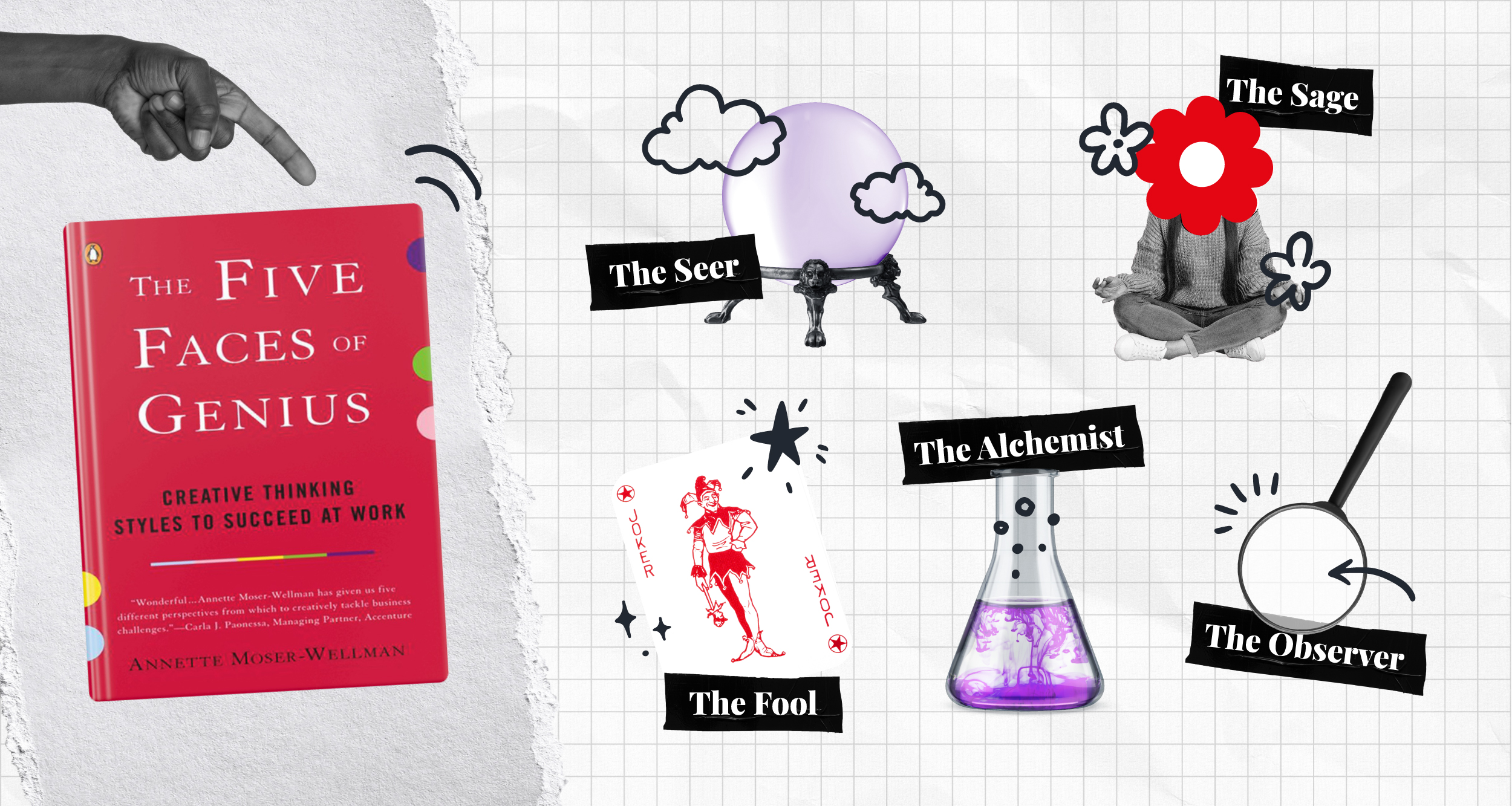
How to Detect Your Colleagues' Genius Types?
Discover The Five Faces of Genius by Moser-Wellman! This captivating book reveals five types of genius that enrich our teams, each bringing their unique touch to innovate and tackle challenges.
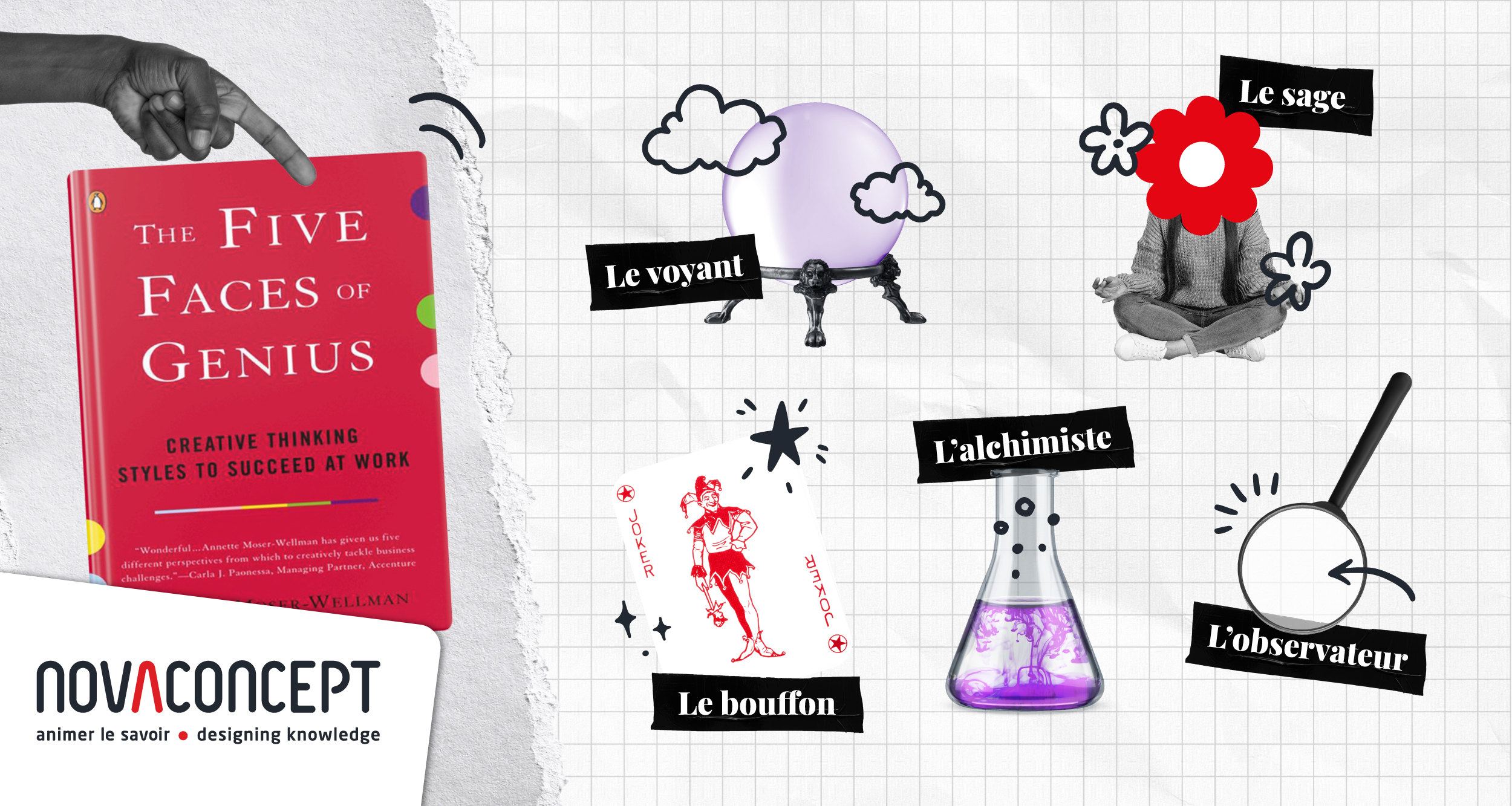
How to Detect Your Colleagues’ Genius Types: A Book Review of The Five Faces of Genius by Moser-Wellman
A few months ago, during one of our brainstorming sessions at our elearning agency, I noticed something fascinating: each of my colleagues approached the problem at hand in their own distinct way. One was focused on long-term strategy, another meticulously dissected the fine details, while yet another boldly threw out unconventional ideas. We were all working towards the same goal, yet the diversity in our approaches was striking—and highly effective.
That’s when I remembered the book The Five Faces of Genius by Moser-Wellman, a book I had bought years ago, and finally decided to read:: I was intrigued! The book offers a framework to better understand the creative strengths we all bring to the table. I realized that identifying and appreciating these strengths in my colleagues wasn’t just interesting—it was essential to real teamwork, especially in a small company where every person’s contribution plays a crucial role in the success of the team.
In The Five Faces of Genius, Moser-Wellman describes five distinct genius types that individuals embody, each contributing uniquely to problem-solving and innovation. By recognizing these genius types in our colleagues, we can better understand how to collaborate, play to each other’s strengths, and elevate the overall performance of the team.
In small companies, this understanding is paramount. We don’t have the luxury of large departments to handle different tasks. Instead, each person’s unique genius type helps us tackle challenges from multiple angles, ensuring we’re constantly innovative and efficient.
The Five Faces of Genius: How to Detect Your Colleagues’ Genius Types
The Seer (Visionary Thinking)
In one of our team meetings, I remember a colleague who kept steering the conversation towards the bigger picture. While most of us were caught up in the details, they were asking questions like, “What does this mean for us in the long run?” This is classic Seer behaviour. Seers naturally look beyond the present, always connecting the dots to future outcomes and trends.
How to spot them: Seers are often the ones to take a step back and look at the larger strategic context. In meetings, they talk about long-term goals and potential future trends. When faced with a challenge, they tie it to broader objectives.
Signs to watch for: You’ll hear things like, “What’s the long-term impact of this decision?” or “How does this fit into our bigger strategy?” They shift conversations towards future possibilities and visionary thinking.
Workplace value: Seers help guide the team towards big-picture goals, ensuring that projects align with broader strategies. They often see opportunities others miss because they’re thinking beyond the immediate task at hand.
The Observer (Detail-Oriented Insight)
We once had a situation where a small mistake almost slipped through in a client project. It was only thanks to an Observer on our team that we caught it in time. Observers are the people who see what others overlook, focusing on the details and ensuring precision.
- How to spot them: Observers tend to be more reserved in meetings but provide sharp, insightful comments. They notice details others might overlook, such as a small flaw in a design or a gap in data.
- Signs to watch for: They’ll say things like, “Did anyone notice that small discrepancy?” or “I think we’re missing a key point here.” Observers pick up on patterns and trends that go unnoticed by the rest of the team.
- Workplace value: Observers provide accuracy and ensure high-quality work by paying attention to small details. Their insights lead to refinements and help prevent errors, elevating the team’s overall performance.
The Alchemist (Creative Combiner)
In a recent brainstorming session, one of my colleagues suggested blending an interactive tool we were developing with a storytelling technique from a completely different industry. It sounded odd at first, but it worked. This was the hallmark of an Alchemist, someone who blends different ideas to create something new.
How to spot them: Alchemists are the ones who connect unrelated ideas and create something innovative. They thrive in brainstorming sessions, where they combine different concepts and are unafraid to take creative risks.
Signs to watch for: You’ll hear phrases like, “What if we combined this technique with that tool?” or “Let’s try something unconventional by merging these two ideas.” Alchemists are always looking for innovative ways to blend different perspectives.
Workplace value: Alchemists bring unique, innovative ideas by combining different methods or tools. They thrive in environments that encourage experimentation and help push the team into new, unexplored areas.
The Fool (Challenger of Conventions)
During a heated discussion on sticking to traditional methods, a teammate humorously blurted out, “Why are we even doing it this way?” It broke the tension and led us down a new, more creative path. That’s the power of the Fool—the one who challenges conventions and brings fresh perspectives.
How to spot them: Fools aren’t afraid to play devil’s advocate. They question established norms and introduce bold, often humorous ideas that shake up group thinking.
Signs to watch for: You’ll hear, “Why are we doing it like this? Let’s flip it around!” or “What if we threw out the usual process and tried something new?” Fools use humor and unconventional thinking to break mental barriers.
Workplace value: Fools disrupt groupthink and push the team to explore new possibilities. Their willingness to challenge the status quo often leads to breakthrough ideas that wouldn’t have surfaced otherwise.

The Sage (Wise, Methodical Thinker)
One time, when our team was stuck in “analysis paralysis”, one colleague calmly simplified the issue into a few key points and led us to a solution. This is typical of a Sage, someone who brings wisdom and clarity to complex situations.
How to spot them: Sages are the ones who step in when things get complicated and offer calm, wise guidance. They have a philosophical approach to problems, often distilling complex ideas into simple, actionable steps.
Signs to watch for: You’ll hear phrases like, “Let’s break this down step by step,” or “What’s the simplest solution?” They often bring clarity and keep the team grounded.
Workplace value: Sages provide stability and wisdom, simplifying complex problems and offering guidance. They’re often a go-to for advice and help the team stay focused when things get overwhelming.
Why This Matters in a Small Team
In a small company, every individual’s strengths matter. We rely on each other to bring out the best in projects, solve problems efficiently, and think creatively. By recognizing and understanding the genius types within our team, we not only improve collaboration but also ensure that everyone is contributing in a way that aligns with their natural strengths.
Knowing who’s the Seer, who’s the Observer, or who’s the Fool can help us better assign tasks, lead projects, and overcome challenges. Instead of expecting everyone to contribute in the same way, we can leverage each person’s unique genius type to maximize our collective success.
In The Five Faces of Genius, Moser-Wellman gives us the tools to do just that—identify, understand, and celebrate the different creative strengths that make teams thrive.
Would you like to uncover the types of genius within your team and learn how to harness them? At Novaconcept, we believe that diverse creative strengths are the key to collective success. Whether you want to integrate these ideas into your practices or develop tailored learning solutions, our team is here to support you. Contact us to learn more!


Green Plants: Partners to Nurture Health and Well-Being in Your Workspaces
Le bien-être au travail passe aussi par l’environnement dans lequel on se trouve. Il est donc important de trouver des moyens de se connecter avec la nature même chez soi. Les astuces : avoir des espaces verts à proximité ou des plantes à l’intérieur.
Le bienfait des plantes vertes au bureau
Que ce soit dans l’édifice de votre entreprise ou chez vous dans votre propre bureau, les plantes vertes comptent parmi les éléments essentiels des espaces de travail agréables et productifs et présentent de nombreux bénéfices. Selon une étude récente de la NASA, les plantes vertes peuvent offrir de nombreux avantages pour la santé et le bien-être des travailleurs et travailleuses à domicile : elles filtrent jusqu’à 87 % des polluants de l’air intérieur, produisent jusqu’à 30 % plus d’oxygène que les plantes sans feuilles, réduisent de moitié la quantité de CO2 et de 20 % les particules de poussière et de moisissure dans l’air. En outre, elles créent une ambiance plus chaleureuse et apaisante qui contribue à améliorer la concentration, la créativité et à réduire le stress et l’anxiété. Afin d’obtenir pleinement les bénéfices des plantes vertes, il est recommandé d’en compter une pour chaque trois personnes employées dans les espaces de travail ouverts.
Quelles plantes choisir pour son espace de travail?
Choisir les plantes adaptées à votre environnement de travail est une décision importante. Il faut prendre en compte le degré d’ensoleillement, le type de sol et la taille de la pièce. Par exemple, si vous avez une pièce qui reçoit très peu de lumière, vous pouvez opter pour des fougères, des philodendrons ou des lys. Si votre pièce est petite, des plantes à petit format comme des bonsaïs ou des plantes succulentes pourraient être une bonne solution.
Novaconcept a sélectionné pour vous des plantes d’intérieur qui ne nécessitent pas de grandes connaissances en matière d’entretien, afin que vous puissiez profiter de l’atmosphère qu’elles apportent sans avoir à trop vous préoccuper de leur soin :
Bamboo brings a subtle natural touch to a workspace. It’s also known to absorb moisture and improve indoor air quality.
Terrariums are one-of-a-kind office decorations, adding a splash of nature and bringing calm to the space.
Cacti are easy to maintain and add a touch of flair. They’re known to absorb pollutants and improve indoor air quality. However, be careful when choosing them as some species can grow to gigantic sizes, making them almost impossible to move.
Philodendrons are perfect for offices since they’re easy to maintain and grow safely in small spaces. They’re also known to remove harmful chemicals from the air. Their large, cascading leaves make them perfect for hanging from ceilings.
Aloe Vera is very low maintenance. Just put it in a sunny place and water it from time to time. It’s known for its air purification properties. And the gelatinous substance inside its stems also helps heal burns and moisturize skin.
English ivy, also known as Hedera Helix, is an excellent plant for workspaces, especially those with big white walls and open spaces. This plant grows quickly without needing too much care. You can have it climb across shelves to spread its soothing greenery.
Est-ce qu’il y a des pouces verts parmi vous? 🌱
Sources :
- « 10 Plantes Vertes Sans Entretien à Avoir dans ses Bureaux », blog.kollori.com, page consultée le 2023-05-12
- « Plantes dépolluantes : que vaut le rapport de la Nasa? », dur-a-avaler.com, page consultée le 2023-05-12
- « Les bienfaits des plantes dans les espaces de travail », platan.fr, page consultée le 2023-05-12
- « Plantes d’intérieur : 5 variétés faciles qui n’ont presque pas besoin d’être arrosées », aufeminin, page consultée le 2023-05-12
- « Plantes au bureau : bienfaits et variétés adaptées », jardiner-malin.fr, page consultée le 2023-05-12
- « Plante de bureau personnalisée aloe vera », genicado.com, page consultée le 2023-05-12
- « Le lierre : entretien, arrosage, exposition », quandarrosermaplante.com, page consultée le 2023-05-12
Écrivez-nous!
Vous aimez le visuel? Vous aimeriez rendre votre information visuelle et accessible? Contactez nos experts!

The art of making your procedures compelling with storytelling
Have you been noticing for a while that not all of your staff is adequately applying the latest procedure for a key operation? You’re probably thinking that, between new arrivals and tasks that have been reassigned, there have been a lot of changes in the team, which certainly explains the situation.
Indeed, in all the hullabaloo, it is quite possible that there have been oversights. You decide to send an email to the whole staff explaining the procedure, step by step, to rectify the situation. However, in the weeks that follow, you do not see any significant improvement. Although clear and to the point, your email failed to capture attention and hold people accountable. A colleague suggests that you use storytelling to increase engagement.
It is well known that human beings retain more information when it is presented to them in the context of a story than as part of a detailed procedure. Why? Essentially, the emotions that are transmitted and experienced through a narrative activate different hormones in our brains, moving the learner from passive information absorption to an “action” mode. In pedagogical terms, we know that this represents a change in learning attitude that allows for higher information retention and more tangible applications in daily life.
The use of storytelling in training also fulfills one of the basic principles of andragogy. In order for an adult to invest in learning new skills or knowledge, they must be able to see the immediate utility. The use of storytelling in e-learning helps to re-frame the way the most important information is presented. Instead of deconstructing a procedure into five key steps, we focus on characters, on situations and issues that echo what happens in real life. A story clearly identifies the context in which the procedure is important. Not only do learners recognize themselves in these situations, but their curiosity is engaged. They will naturally seek to predict the next step or the consequences of a given decision. They are suddenly engaged in the training since they are able to participate in the problem solving themselves and realize that the procedure presented represents a good solution to problems they encounter on a daily basis. Thus, the usefulness of the training becomes apparent, directly increasing commitment.
Storytelling is a particularly effective technique for implementing preventive behaviours, especially in occupational health and safety or cybersecurity. Indeed, it is difficult to get strong support for something that could happen. It is rare for statistics to evoke the strong emotions that lead to changes in behaviour. A statistic is abstract and distant, even when it is scientifically established and alarming. Yet, we have all observed that people’s attitudes change when someone close to them has experienced an accident or been the victim of a cyberattack. This is because these stories engage our emotions. We feel more empathy towards our colleagues than an instruction manual, which means that we are more influenced by their experiences, by their stories. A narrative frame bypasses the coldness of an infographic and highlights the real impacts of a given behaviour.
Now all you have to do is decide how far you want to go, from reproducing a conversation between colleagues to staging a quest worthy of The Legend of Zelda. A world of possibilities awaits.
Contact us to help you write your story and generate the desired impact in your team.

Embracing the Multimodal Learning Experience
Sam sits down with his family to play a new board game in the living room.
Everyone is eager to play, so Sam decides to just skim the rules and start the game. The game seems simple enough, and everyone agrees that it will be faster to read the rules as they play.
At first, this does indeed allow them to play at a good pace. But before long, the players are overwhelmed by all the information they need to remember and apply, and the game is put on hold. The strategy of jumping right into the game to save time has not paid off.
The group reconsiders its initial approach and concludes that it will be better if everyone reads the rules individually. Each person takes the time to absorb the rules and lets the others know when they are ready to play. When they start playing again, the game goes more smoothly, and few clarifications are required. Some people even manage to introduce a little strategy into their playing. Sam doesn’t win but is still pleased with the outcome, knowing that it will be easier the next time they play.
Types of knowledge
This scenario sheds light on the different kinds of knowledge, which are generally categorized into three types:
- Declarative
- Procedural
- Conditional
These categories can be effectively summarized by asking, “what, how and when?”
In the case of a board game, players acquire declarative knowledge by learning to identify the components of the game (the board, pieces, cards, etc.). Procedural knowledge has to do with the actual flow of the game. Finally, conditional knowledge provides the wider context that is necessary to know when to apply a particular strategy or take a given action.
When viewed in this light, it makes sense to learn the components and flow of the game before tackling the conditional elements. To gain a good understanding of the game, it’s important to learn things in the right order.
The same observations apply to the development of skills and knowledge in the workplace. Using a progressive approach to learning is beneficial. In order to create a meaningful learning experience, it’s often a good idea to use different knowledge transmission methods at different times. If your team members can begin by absorbing the “rules” of the game at their own pace, it will be easier for them to apply their knowledge in a real work context.
This is precisely why e-learning can be beneficial for maximizing subsequent in-person training sessions.
The multimodal approach
Through e-learning modules, each person can learn and test different types of knowledge at their own pace and in a self-directed way. The acquired concepts can then be deepened and put into practice during in-person or synchronous virtual development workshops. When it’s time for the group session, you’ll know that all your team members already share a common knowledge base. This also makes it possible to make more of the time you spend together and go further in turning skills into action.
This strategy is similar to the flipped classroom approach used in teaching. In a flipped classroom, the students’ homework is more focused on theoretical content, while the class time is dedicated to exercising their skills in activities. Why? Because students need more support when practising skills. The teacher is there to clarify instructions, provide perspective, get students to take a step back, and answer questions as they come up. In other words, it’s better to give learners tools for understanding at an early stage in the learning process.
Novaconcept provides synchronous and asynchronous learning experiences. Our wide-ranging multimodal offering (e-learning solutions, development workshops and programmes, coaching, co-development, conferences, etc.) enables us to provide a personalized approach that promotes optimized and integrated skills development.
Contact us!
Don’t hesitate to contact us to find out more about our support solutions.
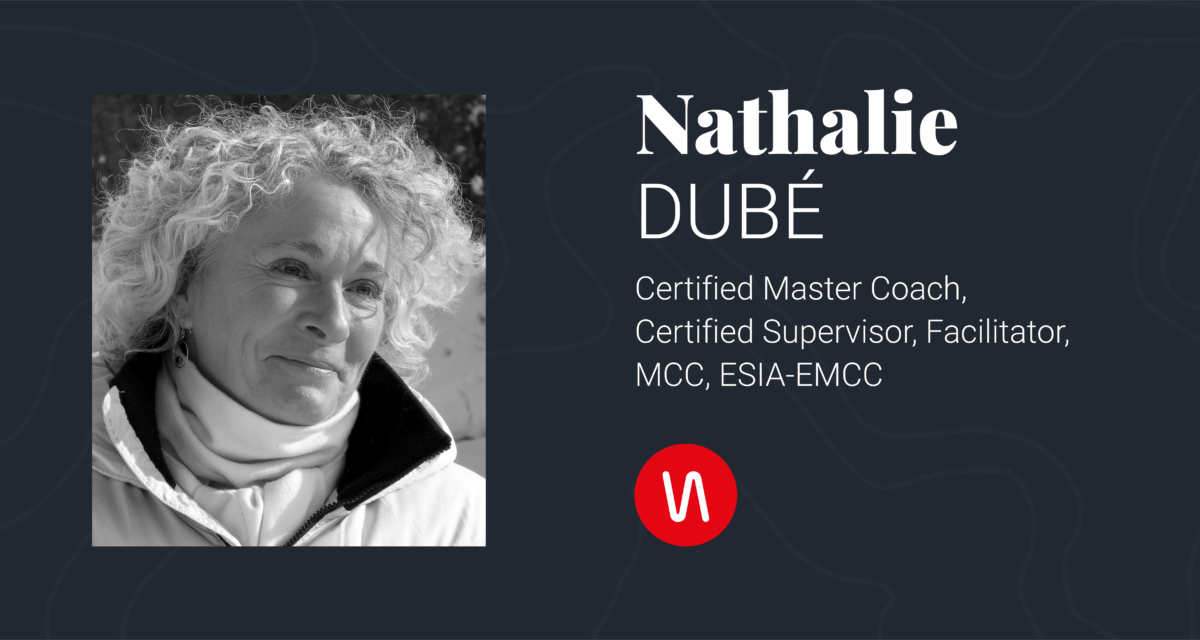
From Expert Manager to Coaching Manager: Transforming Leadership – Meeting with Nathalie Dubé, External Coach for Novaconcept
The Novaconcept team comprises more than 50 experienced consultants with a range of expertise to guide you in developing your teams and leaders and in meeting your organization’s transformation challenges.

It’s always a great pleasure and honour for me to meet the consultants and coaches who have chosen to join the Novaconcept team. I like getting to know their world, vision, approach and what makes them different and unique, and then sharing these riches with my readers.
Nathalie Dubé’s approach particularly touched me since collaboration is the focus of both her practice and our exchange. Collaboration is what motivates her and what she strives for. It’s also what led her to join the Novaconcept team. As she tells me,
“At Novaconcept, ideas are always welcome and everyone’s skills are put to use when larger projects are undertaken. The culture is all about building the extraordinary together.”
However, what most caught my attention during our meeting was our discussion of the five generations that are all currently in the labour market. We talked about the changes that this reality is producing, and the way in which Nathalie, herself a boomer, works on these issues with her clients.
We are at a critical juncture. We can’t wait for the next generation of managers to transform our organizations and respond to the speed of the market and employees’ new expectations and values. The change has to happen now. The necessary move from expert managers to coaching managers represents an enormous paradigm shift. Today’s managers must be willing to be destabilized. They must be able to adapt and change without ever losing sight of their goal, which is itself always changing. They must be excellent communicators, have great empathy and, above all, be able to bring people together.
Managers need to be able to deal with the current labour market’s great generational, ethnic and cultural diversity. In 2023, our leaders need to be agile, strong and inspiring. The manager role has grown more complex. Caring and transparency are qualities that are at a premium. All this is a far cry from the expert manager, who was the knowledge holder and focused only on performance. To make sure that I understand the scope of the transformation required, Nathalie explains:
“Boomers, who were trained in the expert manager culture, are currently leading this diverse group of employees. People from that generation are rarely equipped to make the required changes.”
I find Nathalie’s analysis to be spot on, but at the same time it raises so many questions for me as a millennial.
I feel comfortable enough with Nathalie to ask her something that is on my mind: “How can you, as a boomer, guide other boomers through this kind of transformation?” She laughs and says, “I can’t show up with my ‘boomer’ values when I coach. I have to bring an open mind and a caring attitude.” Nathalie’s extensive experience has resulted in an approach towards effective coaching and facilitating that is based on working on herself. You can only take your clients as far as your own limits permit. Nathalie describes herself as a lifelong learner and, since the transformations needed to meet the demands of today’s market begin with the individual, she wants to help her clients to embark on a similar path. For her, a good coach, like a good leader, is first and foremost a person who works on themselves, who learns to recognize biases, beliefs and values in order to be able to go beyond them, to overcome limitations and to help members of their team to overcome their own limitations in turn. Working on yourself also means being willing to be destabilized, a skill of great importance for navigating a VUCA world where the cycles of change are getting faster and faster. When you are willing to be destabilized, it becomes possible to develop tools to find new directions and get back on track. It means learning to trust your team using a collaborative approach that allows everyone to be agile, creative and innovative.
I can see that Nathalie’s analysis and approach go far beyond the generational issue. It’s about making sure that there is consistency between an organization’s discourse, culture and the actions its managers take to ensure tangible transformation, accompanied by concrete results on a daily basis. It’s clear that she also does the work she asks her clients to do in order to overcome their biases and limitations. She stays flexible and open in order to keep herself anchored in her clients’ reality and needs. This then allows her to take them out of their comfort zone, to encourage them to develop and, most of all, to help them to adapt autonomously in the face of the unexpected.
Contact-Us!
Did this interview with Nathalie Dubé touch on issues that you face in your daily life? Are you looking for a tangible way to transform your organization? Novaconcept and Nathalie Dubé are here to help you develop your managers.
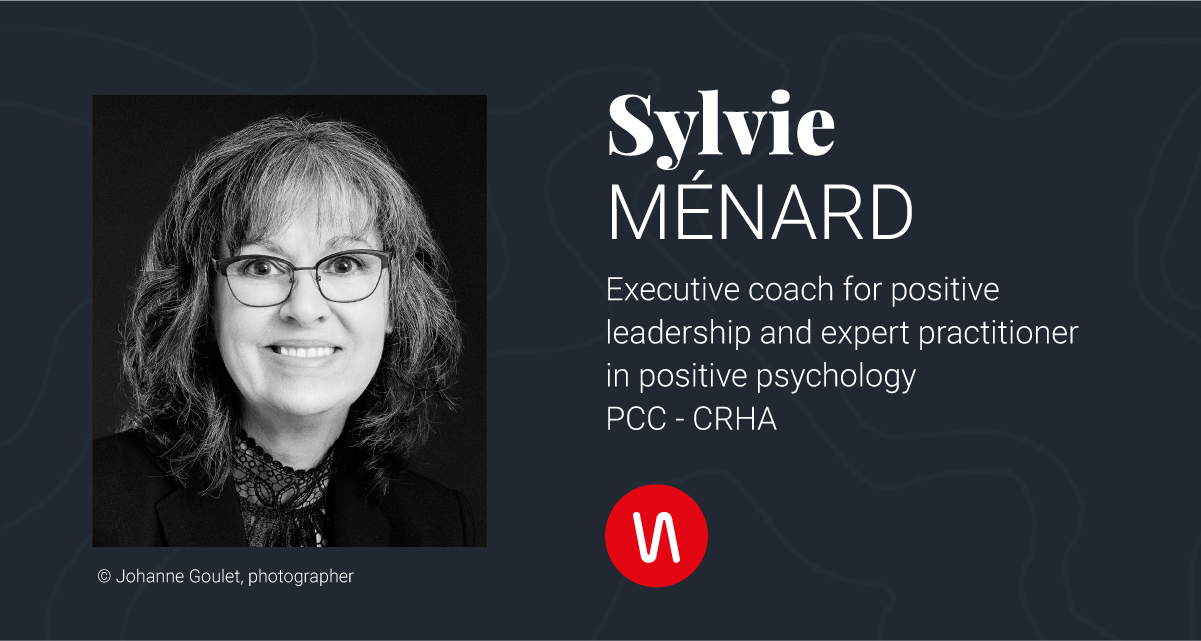
Driving Performance by Satisfying our Need for Belonging - Meeting with Sylvie Ménard, External Consultant for Novaconcept
The Novaconcept team comprises more than 50 experienced consultants with a range of expertise to guide you in developing your teams and leaders and in meeting your organization’s transformation challenges.

Put two curious, enthusiastic and determined people in the same room for an hour, and before the meeting is over, they will have started reshaping the world! Sylvie is very rigorous in terms of content quality. The ideas she presents to me have been studied and tested. Before joining forces with Novaconcept, she took the time to analyze our entire service offering. She quickly realized that our management methods and coaching solutions were in line with her standards, both in terms of form and content. Her desire to join the consultant team arose from the clear alignment of Novaconcept’s values with her own. Passionate about management, she is already looking for the best way to contribute.
As someone who is always on the lookout for better approaches and ways of doing things, I found my meeting with Sylvie Ménard to be a gold mine of new possibilities. Drawing on positive psychology, her long experience in management and her research work, Sylvie shows me a number of ways we can improve our work environment and methods. Her enthusiasm is contagious and I am the perfect audience for her ideas.
Three clear points emerge from this fruitful encounter:
- The need to build on each person’s strengths
- The need to recreate and maintain good working relationships
- The need for informal knowledge transmission
Focusing on strengths
When thinking about improvement, we naturally focus on what is not working and the weaknesses of our team, which can quickly become demotivating and even exhausting. This creates instability, when the aim is actually to improve overall performance. As she explains to me,
“It’s useful and necessary to look at what is going wrong, but the most you will accomplish with this approach is to make people comply with standards. If you really want to go further and improve the level of performance, you have to intentionally identify success stories or areas with high potential and give yourself the tools to develop them. That’s when excellence really comes into play.”
To do this, employers can start by integrating an approach based on strengths and appreciation into their HR processes and management culture. For Sylvie, being a good leader starts with identifying the strengths of each person and putting in place the necessary resources to develop their skills. Building on interests and strengths creates a work environment that is conducive to individual development, impacting the quality of relationships, the work climate and encouraging collaboration. The organization necessarily benefits from the development of this kind of management culture.
Sylvie likens an effective leader to a good conductor. The conductor chooses the music, talks about the intention behind the piece and gives indications for tempo, volume and the entrances of the different sections. But they also know that leaving room for the musicians to interpret the music is the difference between a good performance and a sublime one. They need the space and tools required for adding colour and emotion to the piece, thus creating a unique interpretation. The conductor makes sure that the performance is coherent; the musicians provide the colour. It is the combination of these two elements that makes for an exciting and memorable concert. The same is true for a manager and their team.
The need for good working relationships
According to Sylvie, the effects of the pandemic are still very much present in the workplace. While we have been able to adapt to a new fast-paced reality, and working from home seems to have met the need for a better work-life balance, we still have a long way to go to ensure that this new way of organizing work is productive and stable. As Sylvie points out, we are now missing those moments of informal exchange, although we may not realize it. We sometimes underestimate the importance of having nurturing relationships at work and their positive impact on attendance and performance. It has already been shown that people who have workplace friendships are more diligent and tend to start their day in a better mood. This is in addition to positive effects on collaboration, improved knowledge sharing and the availability of immediate emotional support. People simply have a strong need for relationships, to feel included and to be part of a team. We also want to like our team and to have our team like us. The relationships we develop with our co-workers are key and greatly influence talent retention.
However, moments of informal exchange are not only about creating connections, according to Sylvie. They are also very important for knowledge sharing.
Informal knowledge transmission
Even though we spend most of our days in online meetings, are in regular communication with our teams and clients, and can communicate 24/7 through a variety of channels, it is difficult to really know how our colleagues are doing or how their days are going. Think about it—when was the last time you called a colleague to chat for a few minutes without an agenda? As Sylvie reminds me, it was once the smokers who were the most informed people in a company. During their breaks, they shared helpful tips and information with each other. This informal knowledge transmission allowed for the development and progress of each individual. Sylvie insists that our need to learn from each other without supervision is perfectly natural. There is so much knowledge based on intuition or feeling that cannot be transmitted using procedures. She returns to her musical metaphor—being able to play the notes on a score is one thing, but being able to interpret a piece with emotion is quite another.
In this sense, managers and their teams would benefit from reestablishing moments for informal discussions, even when working remotely. For Sylvie, it is clear that we need to make space for shop talk and the transmission of knowledge between generations. These moments allow us to discuss real situations, to move from theory to practice and to take a step back from our past and future actions. This sharing of experience without an immediate goal creates greater unity and allows us to learn how our colleagues think and work. This in turn leads to greater collaboration and the creation of a bond of trust, both of which feed creativity.
Our meeting is already coming to an end, but I can see that Sylvie still has many ideas and resources to share with me. She suggests a number of articles and conferences to help me further my own thinking. I can’t help but think how lucky I am to work with Sylvie. Her unique style, her professional ethics, her rigour and her desire to develop more positive and caring leadership practices make her a unique speaker and allow her to make a special contribution to the development of leaders and teams.
Contact-Us!
Did this interview with Sylvie Ménard pique your curiosity? Would you like to learn how to combine performance and kindness in your management practice? Novaconcept and Sylvie Ménard are here to help you develop a management culture based on positive leadership.
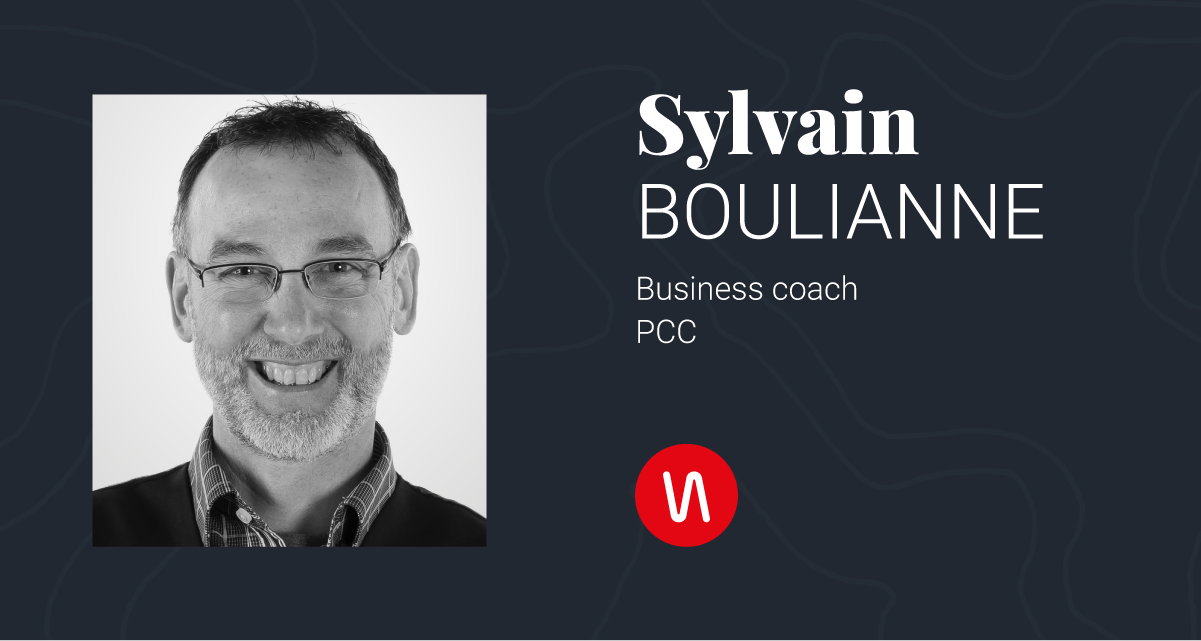
A Company is the Reflection of its Leader – Meet Sylvain Boulianne, External Consultant for Novaconcept
The Novaconcept team comprises more than 50 experienced consultants with a range of expertise to guide you in developing your teams and leaders and meeting your organization’s transformation challenges.

Sylvain is usually the one asking the questions, getting people to reflect and turning their attention inward. It’s not often that the roles are reversed. He is already curious to find out which discussion points will shape our conversation. From the beginning, he is already thinking about the outcome. During our discussion, it will become clear that this attitude says a lot about his approach as a coach. For Sylvain, when we decide to do something, it’s because we are looking for a certain outcome.
From the beginning of our conversation, I notice that Sylvain’s answers and way of responding to me demonstrate directness, efficiency and concreteness, aligning perfectly with his practice. Sylvain specializes in coaching leaders in various global performance optimization contexts, especially through the mobilization of people. As a result of his experience in the field, Sylvain has developed a very pragmatic approach, which features introspection as a powerful tool for taking action and generating fast, tangible results. Just like his clients (mainly SMEs and construction or manufacturing companies), Sylvain likes it when things move and when real action produces real results. Thus, through his coaching, he invites managers and teams to go beyond thought experiments and be ready to make rapid changes in their daily lives.
This need to move is evident in his philosophy. For an organization to be successful and continue to thrive, it must be in a state of motion, along with all its members. And this movement must start with the leader. Of course, innovation is also an important variable, but for Sylvain, it’s the leader that plays the pivotal role in the ability of the company or organization to transform. It’s a simple concept: for an organization to evolve, its leaders must evolve. The path to achieving this vision is not always straightforward, but Sylvain is ready to go where few are willing to venture in order to get there. As he explains to me,
“A leader who isn’t able to develop their company and employees as they would like, in spite of there being great potential, must start by asking themselves to what degree they are responsible for this.”
As Sylvain becomes more animated, it is clear that this is where his special magic lies.
To find out what is causing discomfort or frustration and preventing the implementation of the leader’s vision, Sylvain asks questions that aim at transformational awareness and managerial accountability. What is your responsibility for the things you are not happy with? Is it your attitude, your behavior or your habits that are preventing your team from developing and reaching the full potential you so desire? What initiative can you take today to kick-start the changes you want to see?
In the end, it’s the leader who sets the tone. If they start their day with energy, there is a very good chance that their team members will follow suit. If they want to see changes in their employees, they need to be aware of the changes they themselves need to make. If the leader is making an extra effort and showing openness, staff will be more willing to do the same. If the leader takes their personal development seriously and does ongoing work with the team to find better ways of doing things, it will foster and encourage the development of everyone in the company. This is when extraordinary things can be done!
Sylvain adds,
“It’s not just leaders who need to change their ways, it’s everyone. It’s the force of numbers that makes the real difference!”
For Sylvain, we should always start by asking ourselves what action we can take right now, no matter how small, to improve a way of doing things, to enhance the work environment or to increase workplace happiness. Since work is such an important part of our lives, it needs to be a place of development, trust and recognition. Work must have meaning and be a source of fulfillment and pride for everyone. If we succeed in creating this climate, everyone will be proud to participate in the company’s development.
A question comes to my mind that makes me pause—does this mean that there are no bad employees? Sylvain smiles, and I sense that I have hit on something. According to him, there are rarely bad employees. More often than not, the problem is that people are not in the right place or role. Sometimes, the work environment doesn’t allow for development, or there is a lack of understanding of a person’s motivations. Leadership is about finding the best possible place for each person, understanding their deepest motivations and working to develop them, because all these things will contribute to the company’s development. Sylvain returns again to a familiar point:
“It’s the leader who sets the tone. The company will reflect the leader’s own development.”
Contact Us!
Did this interview with Sylvain Boulianne inspire you? Are you a leader who wants to take action? Novaconcept and Sylvain Boulianne are here to help you and your company develop and get where you want to go.
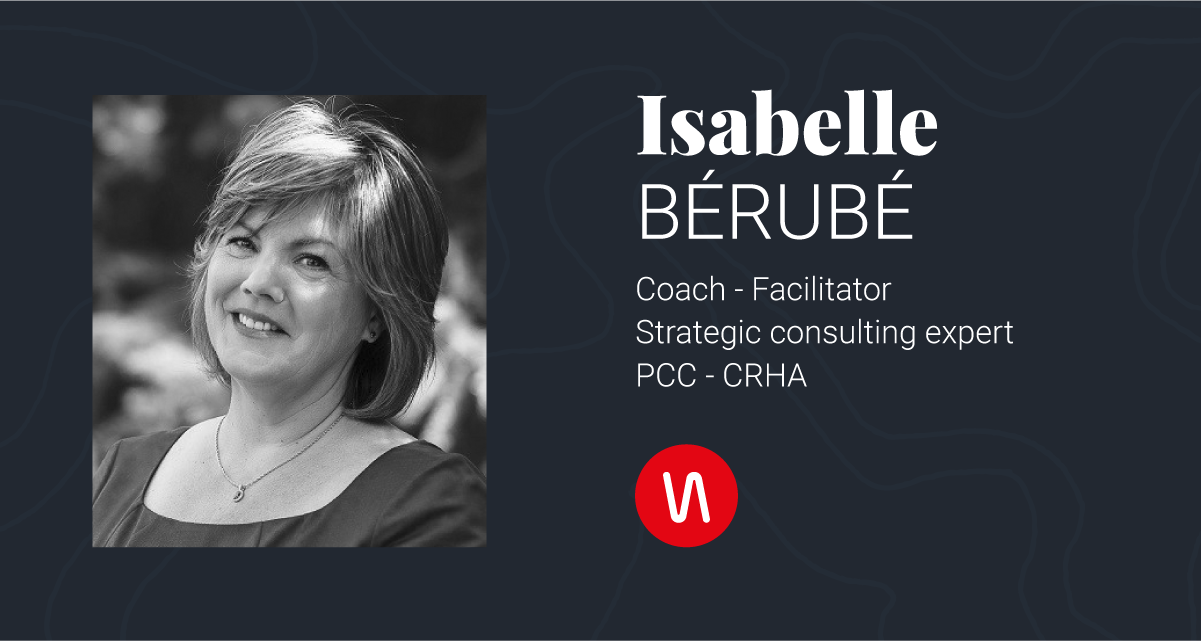
Humanizing Performance – Meeting with Isabelle Bérubé, External Consultant for Novaconcept
The Novaconcept team comprises more than 50 experienced consultants with a range of expertise to guide you in developing your teams and leaders and meeting your organization’s transformation challenges.
When Isabelle Bérubé joined the Novaconcept team, she brought her many years of experience in management, organizational development and leadership coaching. A long-time collaborator at Coaching de Gestion as a Coach Leader Trainer, her extensive experience in management in the field goes hand-in-hand with her insightful and people-focused approach. I can feel her energy throughout our meeting, she’s not afraid to challenge the status quo in her ideas. It’s clear that she listens carefully to her clients to compassionately help them with their challenges.
Isabelle passionately starts talking to me about the challenges she sees in organizations and the urgent need for organizational transformation. Clearly, the old hierarchical management model is no longer sustainable due to issues related to market volatility, labour shortages and a changing workforce profile, union partners, governance and new health and safety legislation. Organizations have no choice but to adapt to the values and profiles of new generations, which means transforming their culture and leadership. We need to make performance and change management more empathetic by putting people first.
Above all, employees are looking for a meaningful job and mission. Performance and financial rewards are no longer enough to retain employees and foster their commitment to the company’s mission. People have been saying this for some time, but it could not be clearer today. Employees want to be involved in development and decision-making. They need personal recognition and a better quality of life, including more flexible working hours. While employees are still capable of creativity and a high level of performance, the means to achieve them must change. Isabelle observed that organizations and leaders who put people at the heart of the organization’s mission and transformation saw many benefits in terms of retention, health and well-being, performance, and employee and customer experience.
For Isabelle, the solution lies first and foremost in a changing culture and developing leaders who dare to question things. Leaders need to use their team’s creativity to find solutions and establish a people-first performance culture. I point out that this is a big job with a lot of unknowns. She looks at me kindly and answers with conviction:
“The culture must allow for mistakes, coaching, feedback, and learning support for managers at all levels. Give them the flexibility to try new approaches and projects and to reach out to employees on the ground to establish a collaborative approach.”
Above all, she recommends practising openness to reconcile performance with people. We need to rethink how we organize work and implement a collaborative approach that includes practice, coaching and co-development communities. These approaches encourage creativity, collaboration, a sense of autonomy and empowerment, collective intelligence and peer learning. They help employees be engaged and creative in finding solutions, and performance will naturally follow.
People still have the desire to grow, move forward and make a difference—what is changing are their reasons for doing so. Money and self-actualization throughout people’s careers are no longer the main drivers. They’re only one set of motivations among many others. Isabelle told me many stories about it, often from high-performing young managers who are already exhausted. They have many questions about whether their presence and contribution make a real and positive difference to their workplace and society. She points out that regardless of their level, these managers share the need to be valued and have their work recognized. The solution also lies in offering support and guidance to ensure that they are committed to the objectives of a given decision. When these conditions are met, their loyalty and performance are second to none.
Isabelle looked me in the eye and says:
“But for that, Anne-Marie, you need leaders who are not only open and willing to listen but, above all, who are consistent. They need to walk the talk, as they say! Authenticity, humility, credibility and transparency are great management strengths that make all the difference in the transformation of both organizations and our vision of performance.”
By the end of the meeting, Isabelle made it clear that while there are many challenges for organizations at the moment, they all share an urgent need to make people their top priority. This conviction leads directly to her mission to guide leaders through the current major transformations to adapt their leadership to their organizational context and influence and engage their teams using people-focused change management.
Despite the scale of the challenges, Isabelle has a range of solutions. I came away from the meeting feeling invigorated and optimistic. With her benevolent but determined approach, Isabelle embodies a view of performance and work organization that is very similar to mine. There is no doubt that in her daily practice, she walks the talk.
Contact Us!
Did you find the interview with Isabelle Bérubé as inspiring as I did? Novaconcept and Isabelle Bérubé are there to help you walk the talk by supporting you in your organization’s transformation and leadership development.
Choose Action Verbs
When we design a new training program or workshop, one of the first steps is to determine the learning objectives. In other words, what strings will the learners be adding to their bow over the course of the learning experience?
Having clear and concrete objectives from the start will foster a higher level of receptivity among learners. As a result, they’ll have a better understanding of the purpose of the skills development activities. They’ll know what is expected of them and what they’ll be able to do by the end of the training.
When formulating a learning objective, we recommend choosing an action verb that reflects the topic’s level of complexity. For example, you can use verbs like identify, describe or name to describe simple actions associated with memorization. Verbs such as compare, interpret or differentiate can be used to target more complex skills. Finally, to indicate that a high level of understanding is needed to apply the knowledge, you can formulate your objectives using action verbs like demonstrate, execute and solve.
The following are examples of concrete pedagogical objectives that are relevant to training contexts:
- New employee training on the structure of an organization (memorization): “Identify the components of a given role and differentiate the role’s various responsibilities.”
- Training on a change in procedure in a company (understanding): “Choose the appropriate procedure according to the context and interpret the data in the new report format.”
- Training for the development of a new skill (application): “Determine the steps to follow in a specific situation and produce a follow-up report.”
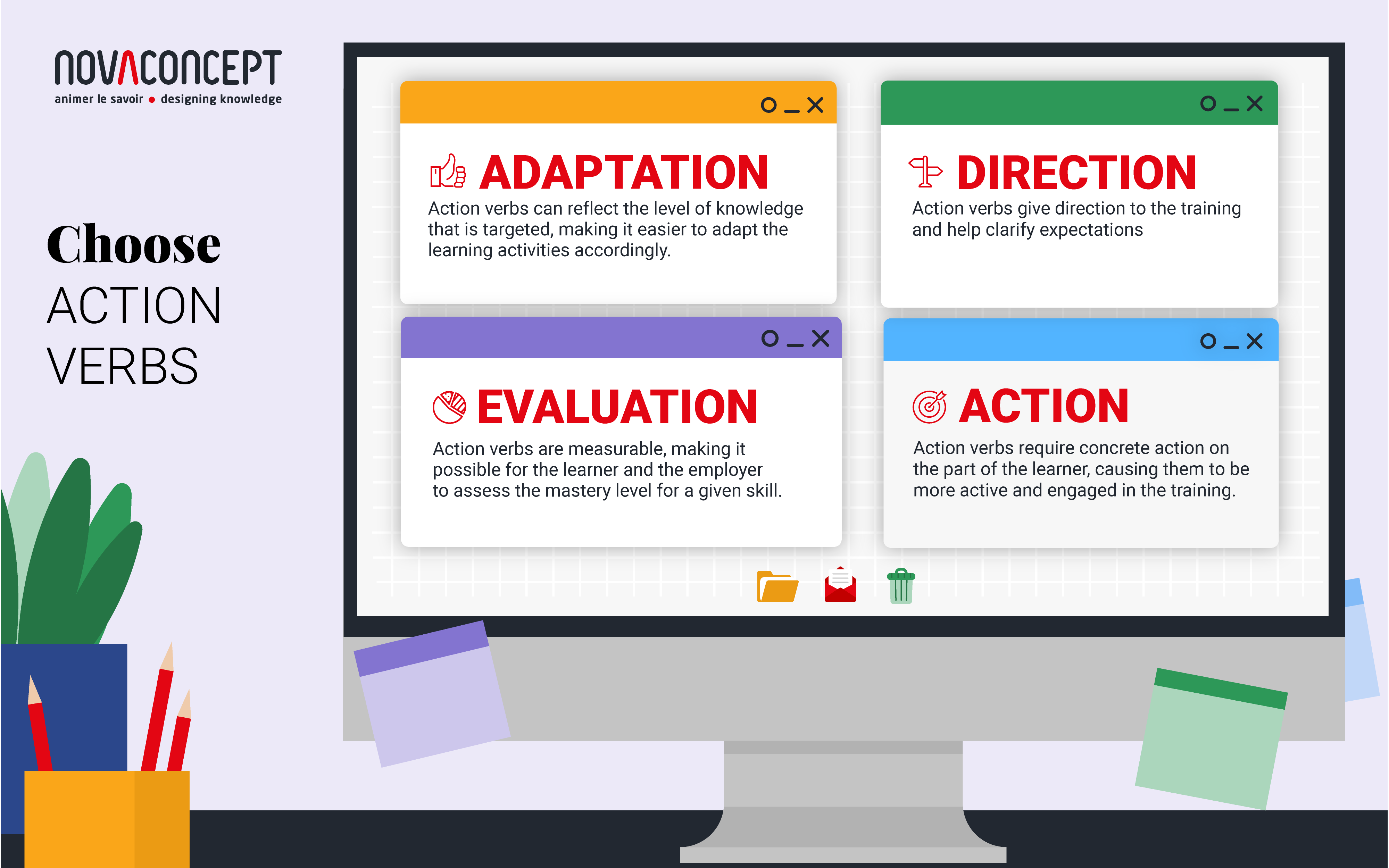
Choosing specific action verbs to define the training objectives will also facilitate the next steps, resulting in what is called “constructive alignment”, where there is consistency between the objectives, content, learning activities and evaluation methods of the training.
Here are some other advantages to using action verbs:
Contact Us!
Our design team will work with you to select objectives that are tailored to your needs, allowing you to achieve the ideal learning curve in your skills development programs and activities. Using action verbs to develop your learning objectives creates the best possible conditions for reaching your goals, and can thus play a key role in the success of your training program.

Six Ways to Reenergize a Depleted Team
This article is an adaptation of “6 ways to Reenergize a Depleted Team” by Ron Carucci and Kathleen Hogan. We also added a few tips.
“Everyone on my team seems tired…all the time. I ask them how they’re doing, and they tell me ‘fine.’ If someone asks for time off, I say yes. They get the work done, but it seems like they’re in a fog. I don’t know what to do.” Does this sound like what you’re currently going through as a manager or team member?
The last two years of volatility saw increased employee turnover, supply chain disruptions, changing workforce expectations about flexibility, and exhausting demands on time and labour.
According to Gallup, seven in 10 people globally report they’re experiencing distress, are exhausted or feel isolated. 53% of respondents—particularly parents (55%) and women (56%)—say they’re more likely to prioritize their health and well-being over work than before. What we’ve learned during this tumultuous period is that people want to keep working—just not at the expense of their overall health and happiness. People don’t work so much for the future now, but rather for the present.
If your team isn’t displaying the vibrant energy you believe them to inherently possess (or that they once had), here are some renewable energy sources you can tap into to help get that vibe where everything seems possible.
1. Initiate purpose-driven career conversations.
The last two years have unleashed a hunger for deeper meaning from our work. People want to know they’re on a path of growth and opportunity for greater impact. They want to talk about their careers but aren’t always comfortable initiating that dialogue.
Leaders can show they care by starting or prompting those conversations and making them routine. This legitimizes people’s desire to talk about their future aspirations while removing any awkwardness. These conversations should also include caring feedback on work areas to improve so that people are ready for opportunities when they arise.
Leaders should also be on the lookout for especially talented (high-potential) people getting bored. For them, your greatest support might be helping them find a more challenging role within the organization, and it could keep you from losing them to an external opportunity.
2. Create team rituals that foster mutual care and belonging.
Team members should be able to talk freely about family difficulties, health needs, and other general concerns. This also makes it safe for people to ask for help when needed and make plans for covering for each other when someone needs to step away from work.
Routinely open team meetings with a variety of check-in rituals. For example, asking people to share something they’re grateful for that day or one word that describes how they’re feeling. The idea is that, over time, the team becomes a place of refuge where you go to get reenergized and restored. Use yourself as an example to encourage buy-in.
3. Help build a portfolio of diverse relationships.
Remote work has narrowed people’s exposure to their immediate peers, weakening ties to cross-functional relationships by as much as 25%. This can increase isolation and monotony, two energy-depleting experiences.
Some companies have started a program called “walk in their shoes,” consisting of weekly peer-mentoring sessions between people in adjacent functions (other teams, divisions, departments, positions, etc.). Participants said they didn’t foresee how much people would learn in the process and its positive effects—in certain cases, it helped people gain more empathy for certain colleagues through a better understanding of what they did and the pressure they were under. In other cases, the program changed how people performed their own jobs and opened lateral career paths they hadn’t considered.
4. Model “Being okay with not being okay.”
Openly discuss how you’ve dealt with work stress or even other challenges like anxiety or burnout. Acknowledging your humanity by being vulnerable about your own well-being makes it safe for others to admit when they’re struggling, rather than feeling the need to feign a posture of false positivity. If you’ve found your company’s wellness benefits helpful, share how they’ve helped you and encourage team members to take advantage of them. Your example of practicing self-care signals its importance to your team, empowering them to follow suit.
5. Swap productivity paranoia for helpful prioritization.
Because leaders lack the visual cues they once enjoyed in an in-person workplace, 85% of leaders say that the shift to hybrid work has made it challenging to have confidence in their teams. Are their employees being productive? This can result in “productivity paranoia” or falling into the micro-management trap. We’re in the realm of perception here since the actual data tells us the opposite. 87% of employees report being very productive, as evidenced by a colossal increase in meetings (153%), the volume of multitasking, and the expansion of work hours overall, not to mention data from the past few months on overall productivity from other companies.
More than just reordering the to-do list you overloaded as a result of worrying whether people were doing enough, you have to eliminate non-value-added activities and connect each person’s work to the organization’s most important priorities. That’s why it’s important to have discussions and training on work organization and managing priorities and time.
6. Watch for signs of flourishing and intervene when it’s waning.
What kinds of questions do people ask in your team meetings? Are they curious, asking with an intent to learn? Are they cynical? Do they have complaints? How are people talking about their challenges? With a sense of empowerment and agency or with a sense of resentment and futility?
We can use Microsoft’s tool as an example: Ensuring our employees are thriving! Premise: Fulfilled employees meet their needs for empowerment, energy and meaningful work and become more engaged, productive and happy.
Be on the lookout and make sure you are helping, supporting and encouraging your employees meet their needs. Be aware of early warning signs and if you spot them, intervene promptly. If someone is dealing with personal stress, they can choose whether or not to share and what to share with you. If they’re overwhelmed with workload demands, offer help as a clear expression of confidence in them, not as a loss of confidence.
The data has shown that today’s volatile, ever-shifting workplaces have the capacity to de-energize employees. Embrace the role you play in keeping your team’s energy replenished and prioritize creating a team environment that keeps energy reserves high.
NOVACONCEPT’S TEAM
Novaconcept has all the tools and resources to help companies and managers make the best possible transition to hybrid work mode and find the balance they need to maintain and surpass effectiveness, efficiency, energy and well-being at work…
Come and meet us!
This site is protected by reCAPTCHA and the Google Privacy Policy and the the Terms of Services apply.
Cross-communication - Meeting with Cyrille Zimmer, External Consultant for Novaconcept
Cross-communication: a key tool to better cope with complexity and today’s transformation challenges
The Novaconcept team comprises more than 50 experienced consultants with a range of expertise to guide you in developing your teams and leaders and meeting your organization’s transformation challenges.

It’s 9 a.m. on a Friday, and I joined Cyrille for the third meeting of the day on his agenda. And yet, I felt that I had his full attention over the hour in front of us. His demeanour during our meeting mirrored his client-focused approach. He’s a great listener and pays special attention to understanding my needs for our discussion. That’s great, as I was keen to learn more about his vision and approach to organizational transformation. How do we change course and sail on the uncharted waters in the current context of organizational change?
When he talks about his approach and expertise, our shared values and cz conseil’s synergy with Novaconcept’s mission become obvious. Cyrille and his team guide company managers as they build and maintain effective, committed and motivated teams in a changing workplace. The client is core to his approach, and he suggests highly tailored solutions during his work, as each organization is unique.
Cyrille has coached teams through various change management challenges for over 15 years. His mission is to dispel the perceived complexity of that topic. He makes sure to gain the commitment of managers and gives them the tools to sail with confidence and ease as they go through a transformation that sometimes causes a bit of doubt and discomfort.
“We work really well together. We have fun. This partnership makes a lot of sense to me!”
Cyrille and his team work in co-creation with their clients to ensure they’re asking the right questions to get things done. For Cyrille, managers have a crucial role to play during the transformation. A lot is expected of them, but for that to happen, they need the right tools. This is where he comes in by asking questions and humbly listening to understand what the client is facing and the issues they’re encountering, in order to co-create and propose relevant tools tailored to each manager’s needs. His greatest strength is taking his knowledge and experience in about twenty sectors and putting them to use in the field to offer tailored and concrete solutions that will make a difference. In his experience, a solution doesn’t have to be complicated to be effective—quite the contrary.
Since 2020, by force of circumstances, companies have had to adapt and quickly transform on an ongoing basis. They had to quickly make decisions. The impact of organizational decisions on team manager workloads has often been downplayed. That’s not even mentioning the lack of time to ensure everyone is on board with the transformation proposal. Cyrille goes on to say that we give a lot of thought to the project itself, but not necessarily to how people will experience the project.
Coming up with a solution is only part of the process for Cyrille. It’s vital to consider how this solution will be received and anticipate how people will live with it in their day-to-day. Take the time to analyze possible apprehensions, explain the reasons (the “why”) for the change, and put the change’s positive impacts forward. This minimizes resistance to change, which is and will always be there in this kind of process.
Let’s not forget the need to provide managers with the tools they need to deal with this transition period so they can become change facilitators for their teams and take charge of developing their teams’ skills. Teams will have to learn and create new ways of doing things, integrate procedures, change habits, and find their pace of work again. There’s a learning curve that inevitably leads to a short-term drop in productivity. However, this productivity drop is not a bad sign. Quite the opposite, it’s proof that everyone is moving and that the transformation has truly begun. When you create organizational alignment and ensure buy-in from everyone, you set the table for the suggested solutions to stick and help achieve your desired long-term goals.
It’s clear to Cyrille that a successful organizational transformation depends first and foremost on everyone’s commitment. No manager should carry this burden alone. Cyrille’s strength is getting teams to better communicate with every stakeholder and to develop shared leadership, whether at the executive, managerial or employee level. When he takes action, he ensures that the message is carried strongly and shared across the organization. He coaches management teams to show them how managerial decisions can be well conveyed, as well as how to go from game plans to concrete and engaging employee actions.
Cyrille’s words resonated with me. He definitely has a gift to put the right words to a feeling, ensuring everyone understands. I can see the strength of this people-focused and tangible approach, where listening helps us shift to solution mode. Turning a ship around, charting a new course and staying on that course requires a whole crew, a lot of communication, and sometimes a little outside help.
Contact Us!
Novaconcept and Cyrille Zimmer’s team are there to coach you through your transformation and make sure you get to port safely.
This site is protected by reCAPTCHA and the Google Privacy Policy and the the Terms of Services apply.
Creating Engagement in Distance Learning
Before you start writing the narrative for online training, it is important to properly identify the target audience. Knowing whom to address helps us set the right tone to get learners engaged as much as possible.
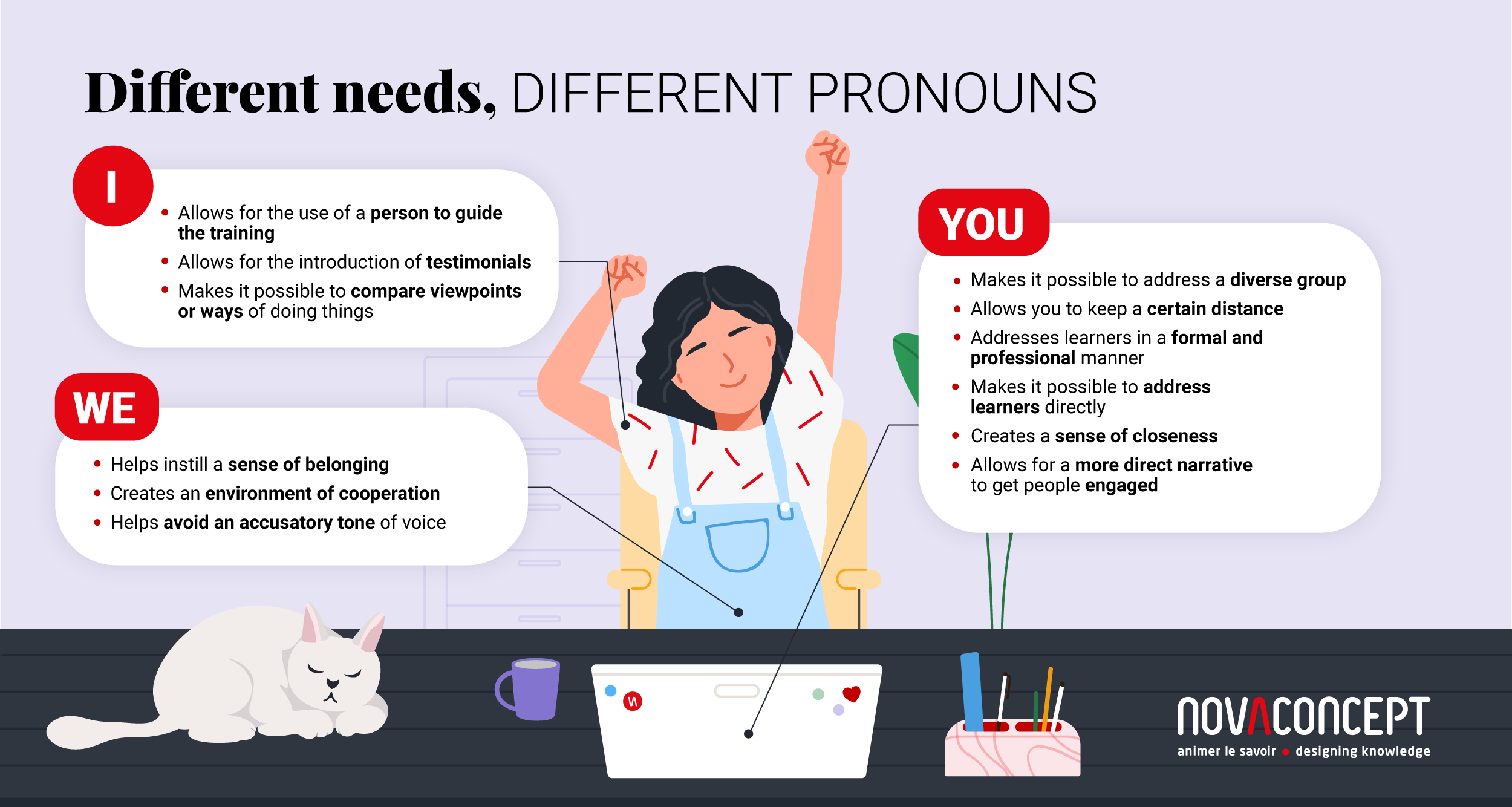
Depending on the needs, the choice to use “I,” “you” or “we” makes it possible to achieve the various objectives in terms of personalization and engagement. The preference to use “you” in e-learning doesn’t mean that this approach is best suited to meet your needs or goals.
In this infographic, you will find some key points to guide you in your choice of narrative.
Contact Us!
If you haven’t already decided on the most appropriate approach for your needs, our pedagogical design team is here to answer your questions and help you choose strategies that are most closely aligned with your objectives and needs.
This site is protected by reCAPTCHA and the Google Privacy Policy and the the Terms of Services apply.